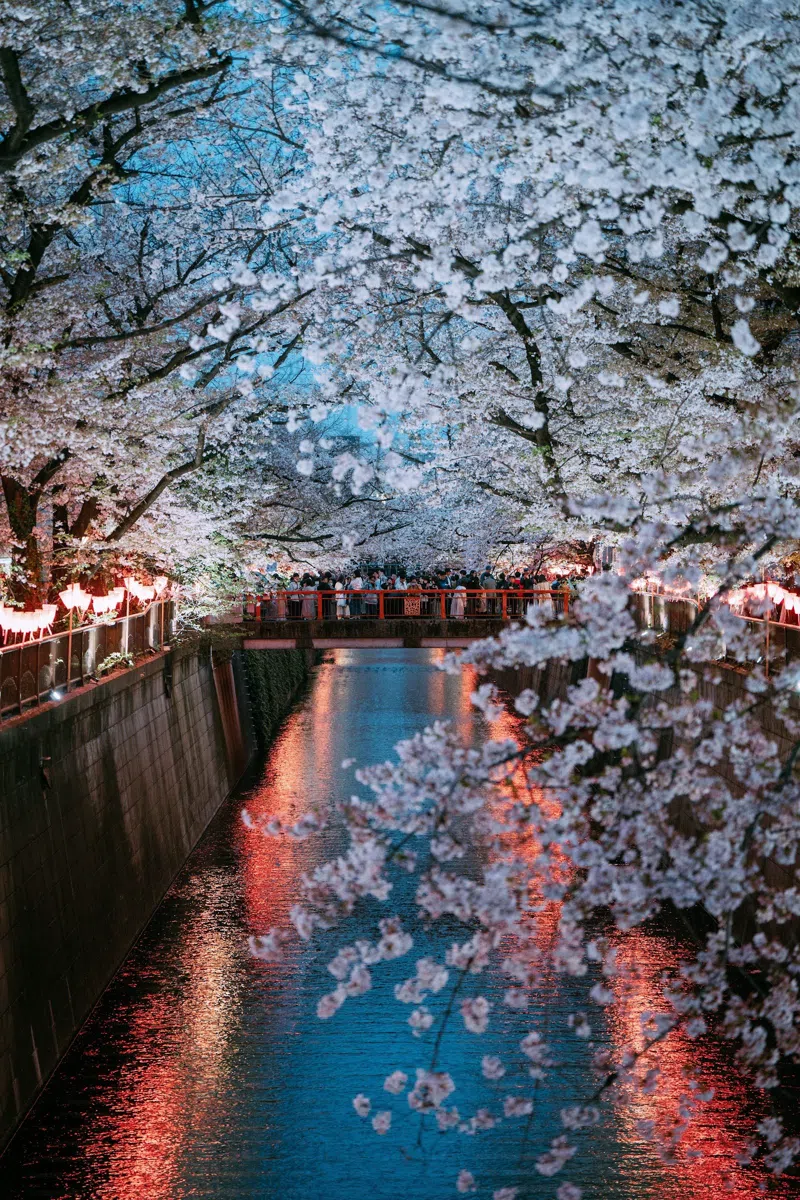
Water moves so slowly along Kyoto's Philosopher's Path that in high summer it seems to stop altogether, a pale green ribbon holding the reflection of cedars and low stone walls in equal measure. In April the same canal vanishes under a corridor of cherry blossom that draws crowds from every direction; by late November it runs the colour of embers, littered with maple leaves that spin lazily on the current. Two kilometres, four seasons, a scattering of temples that have watched the walk change without much changing themselves — this is Kyoto at its most unhurried, and it rewards exactly the pace it asks of you.
Where the Path Begins: Ginkaku-ji and the North End
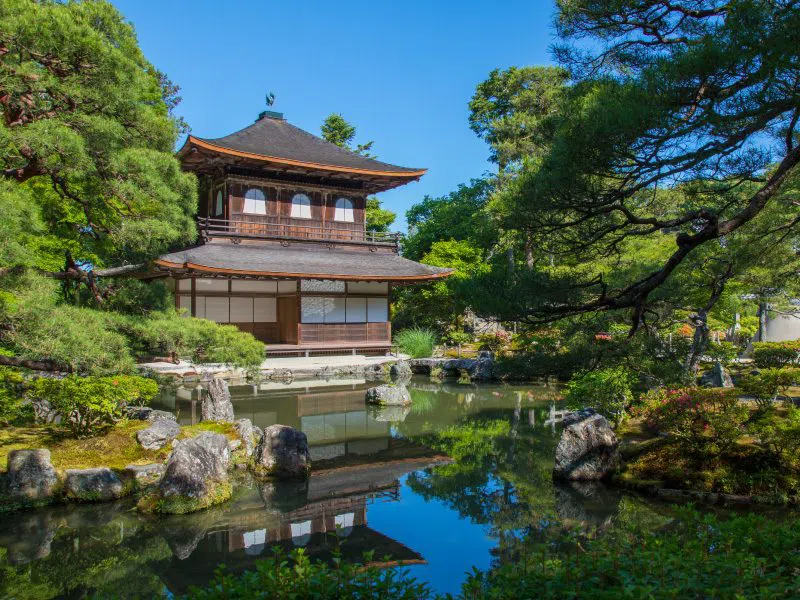
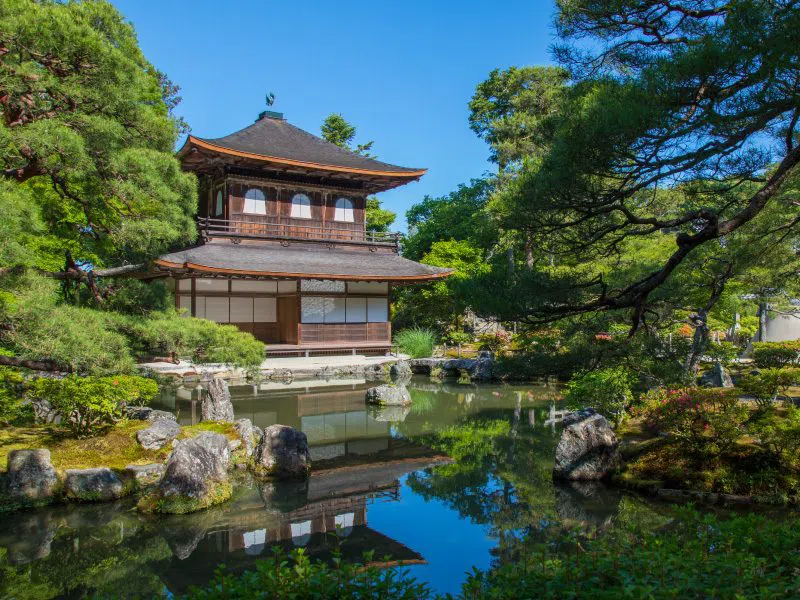
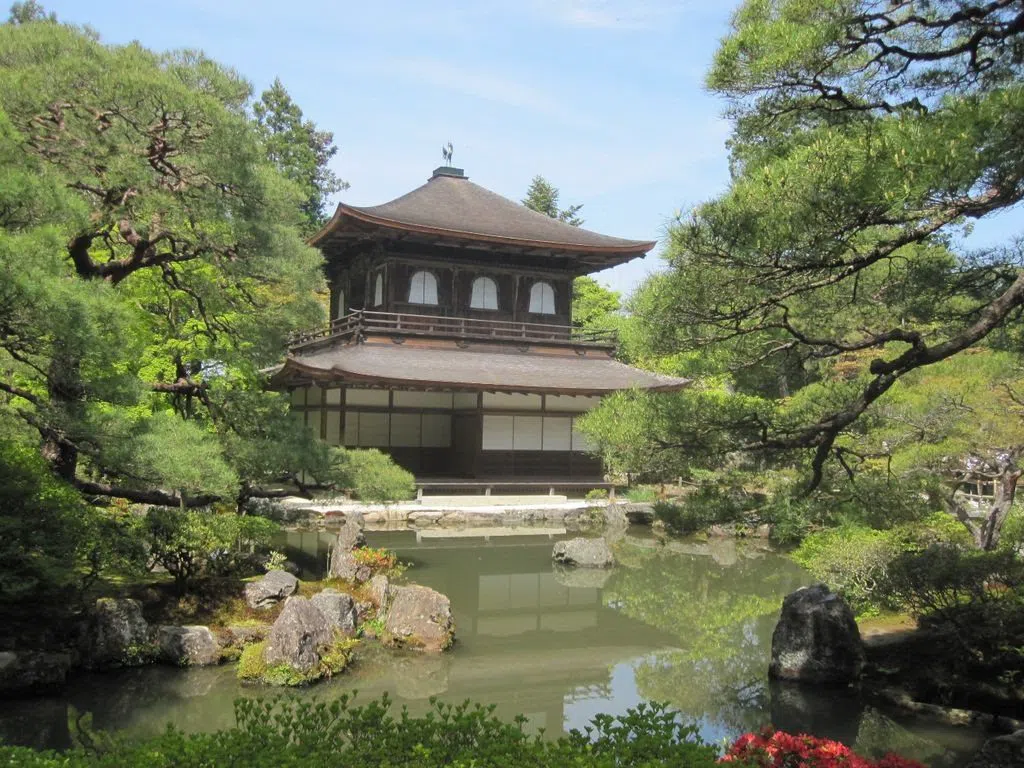
Most visitors arrive at the northern terminus, where the philosopher for whom the path is named, Nishida Kitaro, is said to have walked each morning on his way to Kyoto University, working through a lecture in his head as the canal ran beside him. Ginkaku-ji (Silver Pavilion / Jisho-ji), in the Ginkakuji-cho neighbourhood, is both the start of that daily walk and the destination in its own right: a Muromachi-era retirement villa turned Zen temple, built in the 1480s by the shogun Ashikaga Yoshimasa in conscious imitation of the golden Kinkaku-ji across town, though he died before it was ever lacquered silver — which is why the pavilion has stood in plain, weathered wood for over five centuries, arguably more beautiful for the accident. Admission is ¥500, rising to ¥1,000 from April 2026, a jump worth knowing about if you're pricing out a group visit later in the year. The temple takes tour groups freely, and it shows: come at opening, when the raked-gravel "sea of silver sand" cone still holds the low morning light and the paths haven't yet filled with umbrellas held aloft for photographs. By eleven on any clear weekend the approach lane is a slow shuffle; arrive early and you'll have the moss garden largely to yourself.
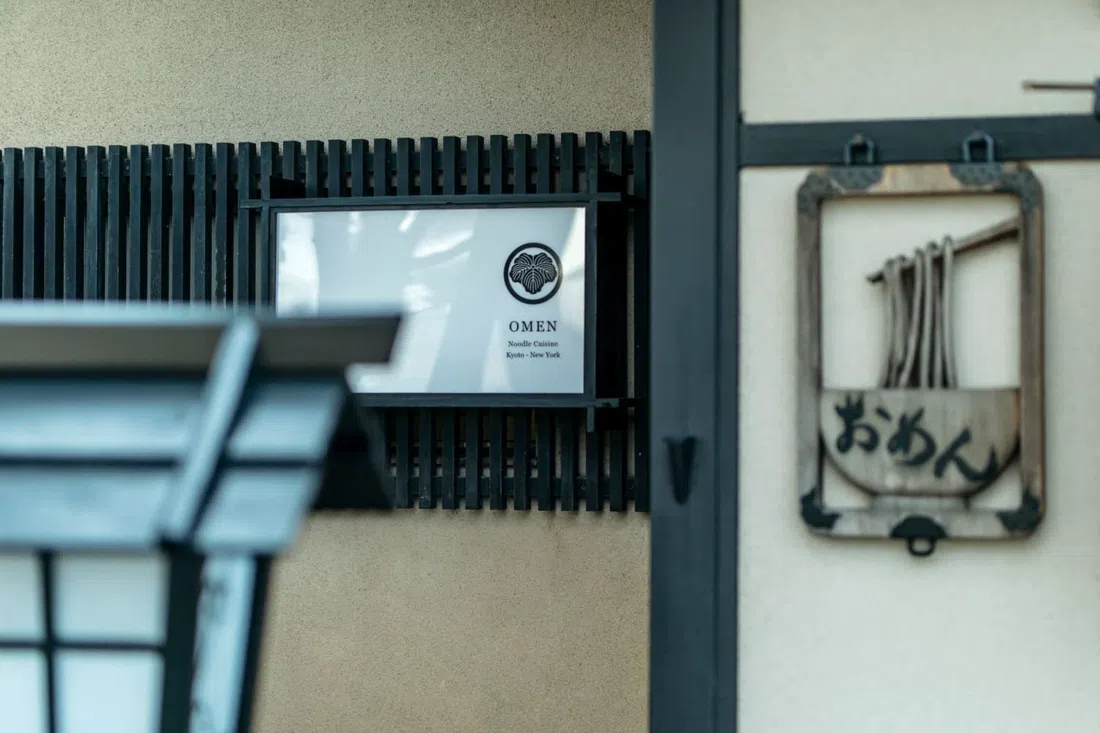
Immediately outside the temple gate, still in Ginkakuji-cho, Matsubaya sells the walk's classic reward: matcha soft serve and small cream puffs shaped like the pavilion itself, from a grab-and-go counter built for exactly the kind of foot traffic Ginkaku-ji produces. It handles a crowd without slowing down, which makes it the right choice if you're travelling with a group and don't want to lose twenty minutes to a queue. For something more substantial, walk two minutes to Omen Ginkakuji Honten, also in Ginkakuji-cho and the original branch of what's since become a citywide dip-udon chain — thick, hand-cut noodles served cold with a hot sesame-and-vegetable broth for dunking, alongside a small mountain of accompaniments you add as you like. There's no reservation system, so at peak lunch hours a queue is normal, especially with a group; the English menu makes ordering painless once you're seated, but budget the wait into your schedule rather than fighting it.
Along the Canal: Honen-in and the Craft Detour
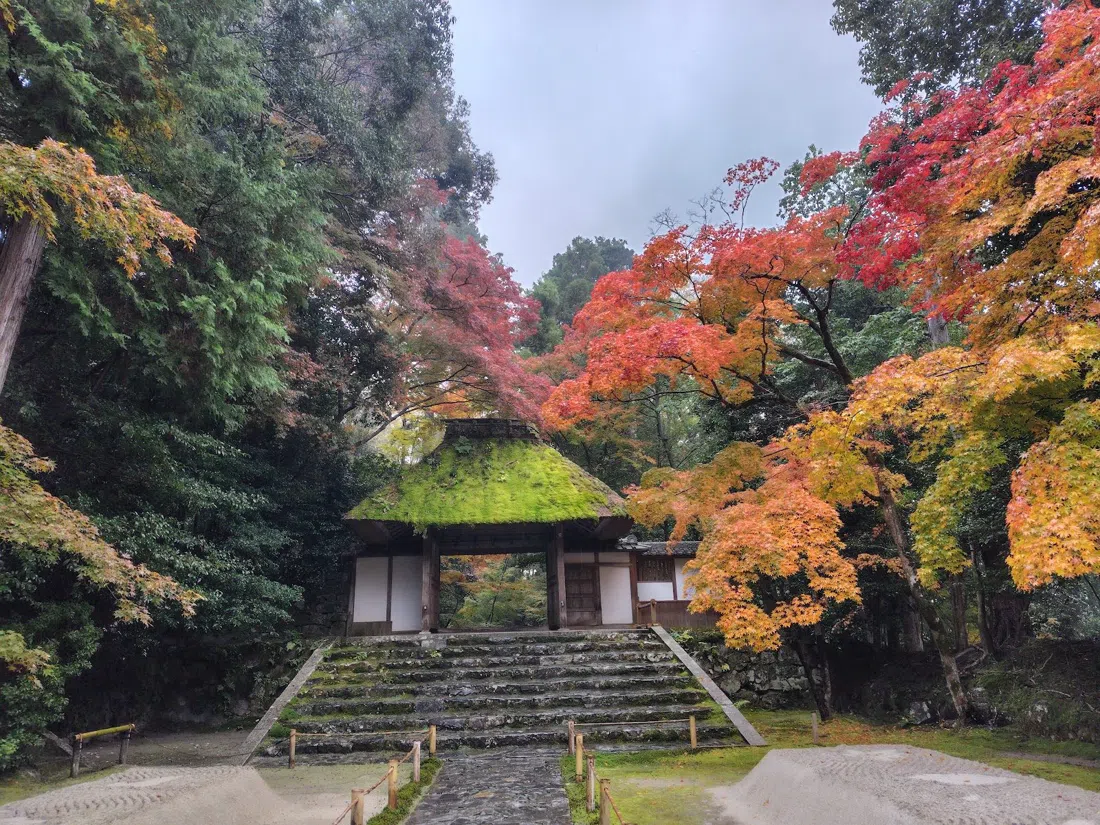
South from Ginkaku-ji, the path proper begins — a paved lane running along the Lake Biwa Canal's irrigation channel, lined with cherry trees whose age varies enough that no two blocks bloom in quite the same week. A short detour off the main route leads to Honen-in, in the Shishigatani area, a temple most visitors experience without ever going inside: the outer garden, with its two raked sand mounds flanking the thatched gate, is free and unticketed, and it's become one of the most photographed single spots on the entire walk, sand patterns changed seasonally by the resident monks. The main hall itself is a different matter — it opens for only two short windows a year, April 1st to 7th and November 1st to 7th, so unless your dates line up exactly with cherry blossom or the first days of the autumn colour, treat Honen-in as a garden stop rather than an interior one. Groups are welcome in the outer precinct; there's no door policy to navigate.
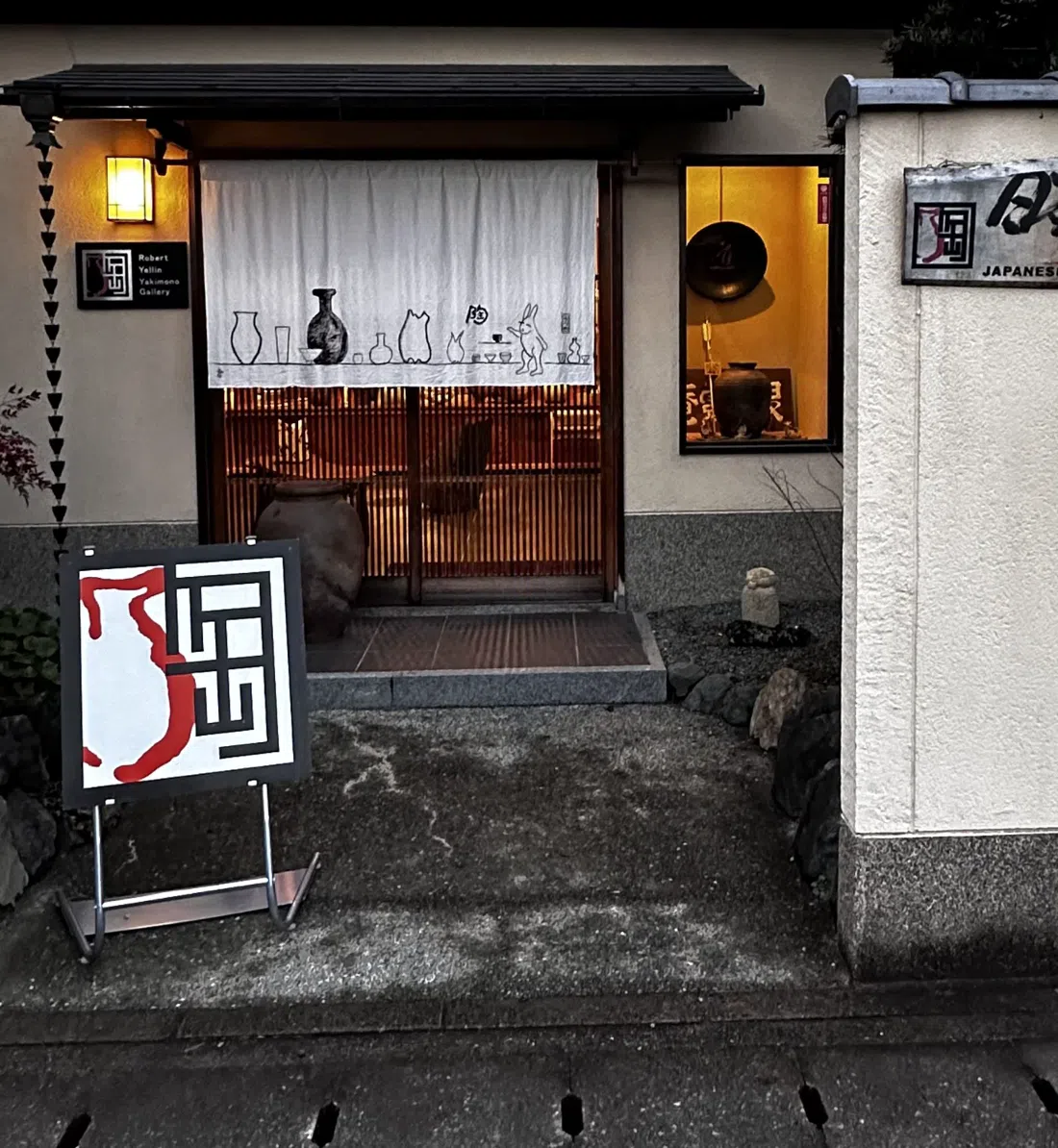
Further along, set back just off the canal path in the Jodoji neighbourhood, is the Robert Yellin Yakimono Gallery, a private ceramics gallery run by an American expert on Japanese pottery who has spent decades collecting and writing about the country's kiln traditions. This is the one stop on the walk that genuinely requires forward planning: it's appointment-only, reached by email or phone ahead of your visit, and it isn't set up to take large tour groups turning up unannounced. Browsing is free, and the pieces range from affordable studio work at ¥5,000 up to museum-grade ceramics that collectors fly in for — but the caveat matters more than the collection here. Arrive without an appointment and you'll be looking at a closed door, however good the light is on the sign.
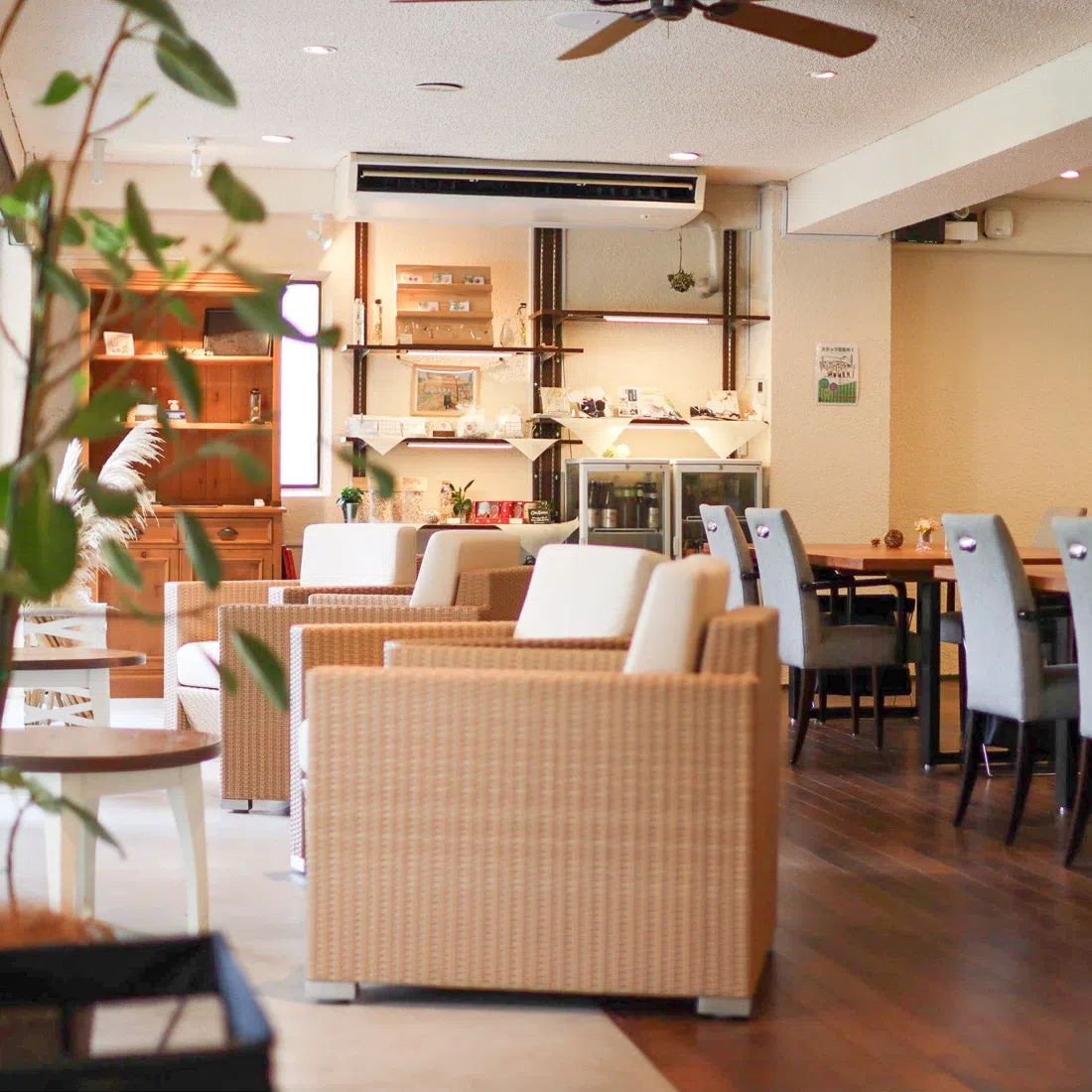
Closer to the water, also in Jodoji, the Green Terrace (Riverside Cafe) occupies a building with real literary history — it once housed a coffee shop run by a member of novelist Junichiro Tanizaki's family, and it now serves as the best canal-view lunch stop on the path, a small terrace with outdoor seating that welcomes dogs and suits couples or small groups rather than coach parties. Lunch runs ¥1,200–2,000, simple and well judged rather than showy, and the point of the place is really the view: sitting at water level with the canal a few feet away, cherry petals or maple leaves drifting past depending on the month. It's closed on Wednesdays, worth checking before you build a day around it.
The Quiet Climb to Konpuku-ji
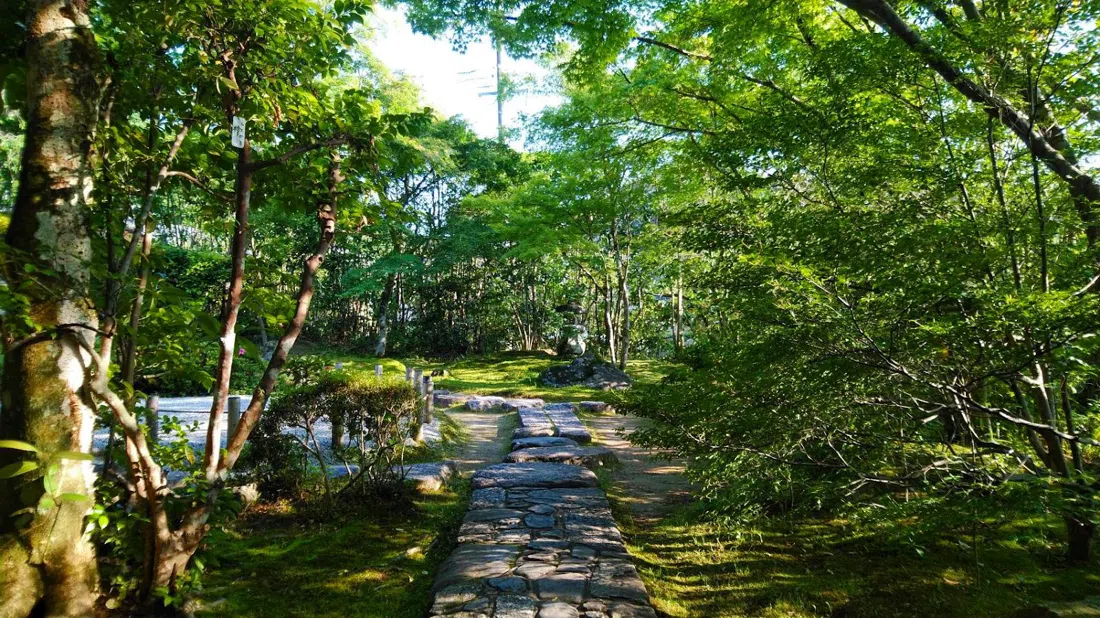
Off the main path, up a short flight of stone steps into the hills east of the canal, sits Konpuku-ji, in northern Higashiyama — a small temple that gets a fraction of the footfall of its neighbours, and suits exactly the kind of traveller who finds that appealing. This is where the haiku master Matsuo Basho is said to have stayed in a modest thatched hut, and the hut itself, rebuilt and preserved in the temple's hillside garden, remains genuinely quiet even during the parts of the year when the canal path below is shoulder to shoulder. Admission is ¥300. The temple is better suited to independent travellers or small groups than large tours — not because of any formal restriction, but because the paths and garden are narrow enough that a coachload changes the character of the place entirely. It's closed January 16th–31st, August 5th–20th, and December 30th–31st, so it's worth checking dates before making the climb your reason for coming.
Otoyo Shrine and the Final Stretch
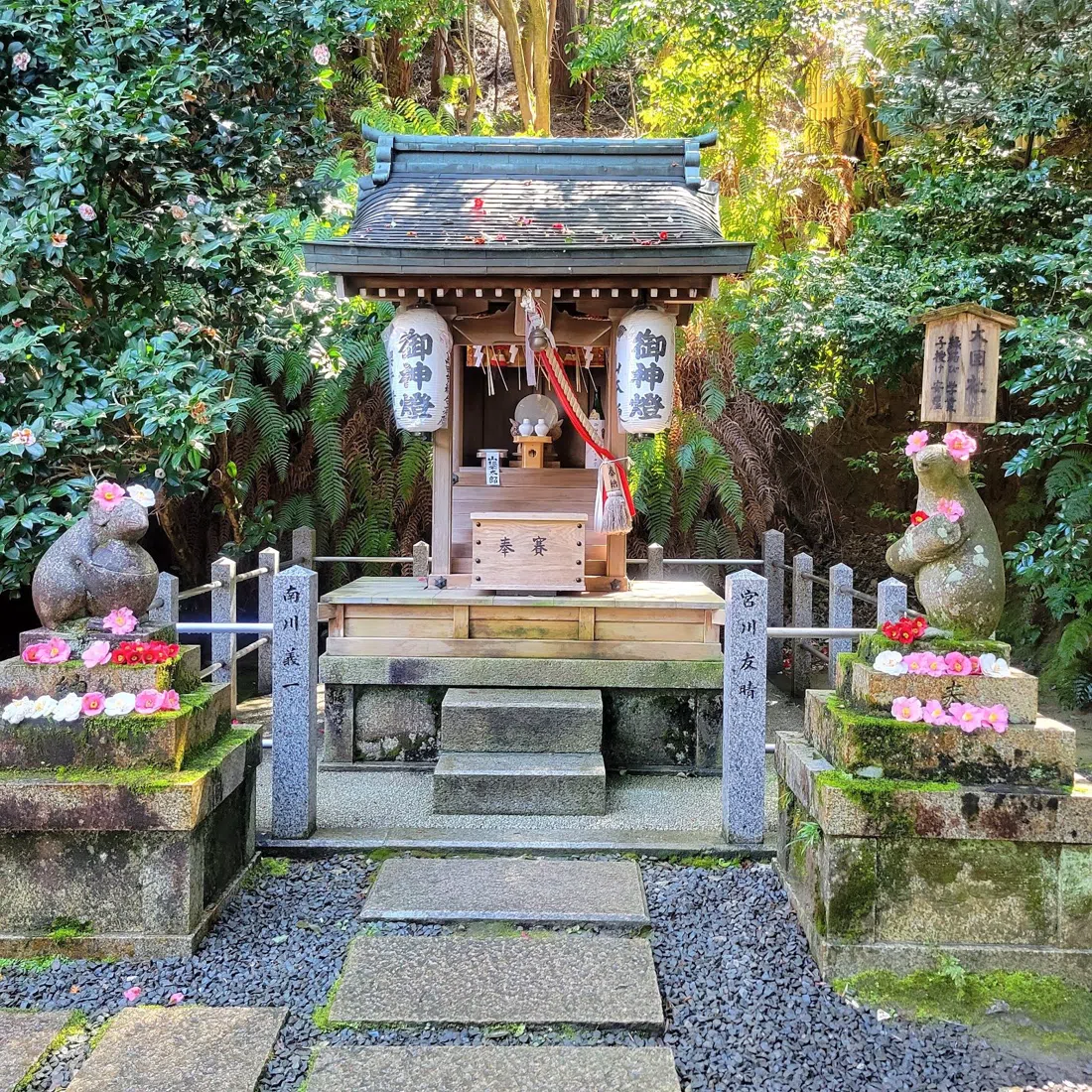
Back down at canal level, a small detour off the path leads to Otoyo Shrine, in the Nanzenji-fukuchicho area, Japan's only shrine guarded by mice rather than the usual foxes or lions — stone mouse statues flank the honden in place of the customary komainu, a quirk tied to a local legend about the shrine deity's rescue by mice during a fire. It's a tiny site, best appreciated by pairs or small groups rather than a full tour bus, and it takes only a few minutes to see properly: the appeal here is the oddity itself, not scale. Free to enter, and easy to combine with a longer stop nearby rather than treated as a destination in its own right.
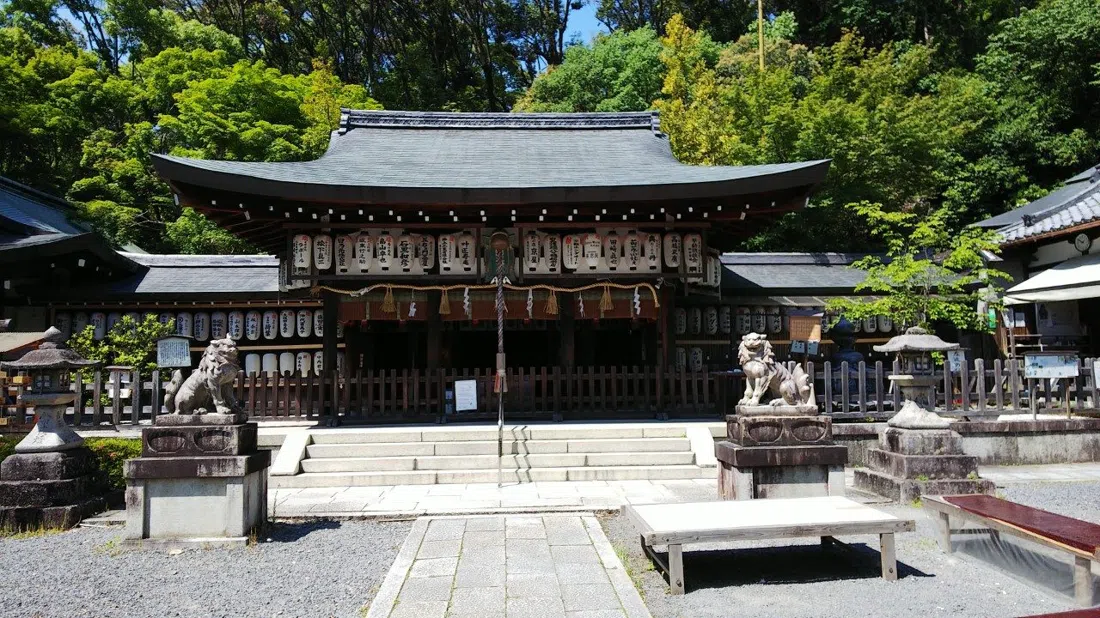
As the canal narrows toward its southern end, the path passes Kumano Nyakuoji Shrine, also near Nanzenji-fukuchicho, a small, free shrine that marks the actual official start or end point of the Philosopher's Path proper — a fact that surprises people who assume the walk begins or ends at one of the larger temples nearby. It's fine for groups passing through on their way to Eikan-do or Nanzen-ji, but there's little reason to linger; treat it as the waypoint it is, not a stop to build time around.
The Southern Anchors: Eikan-do and Nanzen-ji
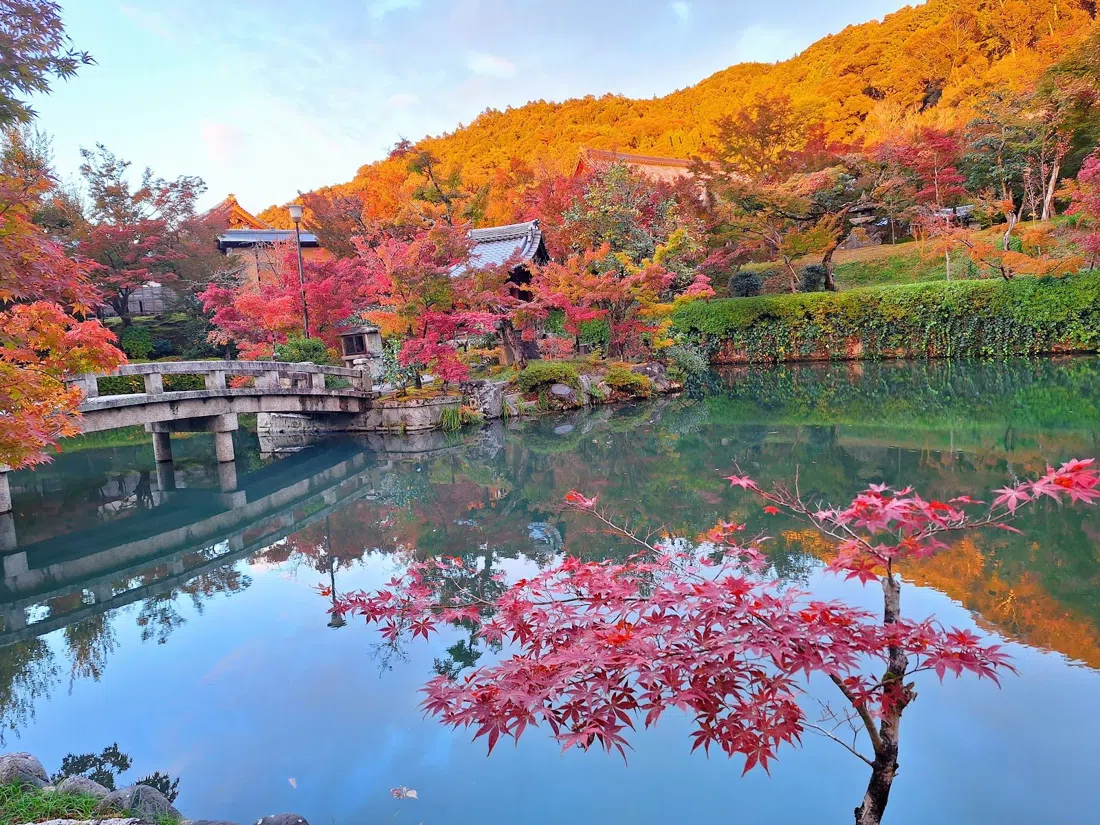
A short walk from Kumano Nyakuoji brings you to Eikan-do (Zenrin-ji), in the Eikandocho neighbourhood, the single most famous maple-viewing temple in a city that takes its maple viewing seriously. Regular admission is ¥600, rising to ¥1,000 during peak autumn from November 7th to 30th, when the grounds also open for evening illumination for an additional ¥600 — the maples lit from below against a black sky, reflected in the temple's pond, is one of the genuine seasonal spectacles of Kyoto and draws crowds to match. The temple handles large tour groups well during the day, with wide grounds and clear circulation routes, but those autumn illumination nights get very congested; if a calm visit matters more to you than the lit-up drama, come in daylight, ideally on a weekday, and save the night visit for when you're prepared to queue.
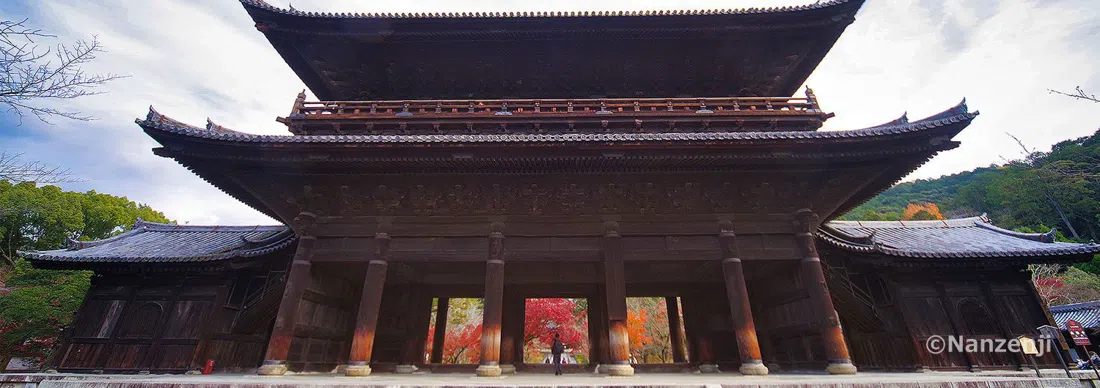
The walk's effective southern anchor is Nanzen-ji, in the Nanzenji-fukuchicho neighbourhood a short distance further on — one of the most important Zen temples in Japan, head temple of its own school within the Rinzai sect, with grounds large and open enough to absorb big groups without ever feeling crowded the way Ginkaku-ji can by midday. Entry to the grounds themselves is free; the Hojo garden, a well-regarded dry landscape garden within the complex, costs ¥600 separately, and it's worth the add-on if you have the time. The real surprise for most first-time visitors is the Suirokaku aqueduct that cuts through the grounds — a red-brick Meiji-era structure built to carry water from Lake Biwa into the city, entirely unexpected against the wooden temple architecture around it, and one of the most photographed non-temple sights in this part of Kyoto precisely because so few people arrive expecting it.
Four Seasons on the Path
The Philosopher's Path is really four different walks depending on when you take it, and it's worth being honest about which one you're likely to get. Spring, roughly late March into early April depending on how the season runs, is the reason most people plan a trip around this specific canal: several hundred Somei-yoshino cherry trees line the water, and at peak bloom the path becomes one of Kyoto's most crowded pedestrian corridors, particularly on weekends. Come at first light if you want the blossom without the crowd; by mid-morning, movement along the narrower stretches slows to a shuffle.
Summer turns the same walk into something closer to a quiet green tunnel — the canal running low and still, cicadas loud in the trees, far fewer visitors than the shoulder seasons, and genuinely hot, humid conditions that reward starting early and finishing by late morning. It's the least photographed version of the path and, for that reason, often the most peaceful one to actually walk.
Autumn, from early to late November depending on the year's temperatures, brings the maples that make Eikan-do famous, and the same colour spreads along the whole canal, not just the temple grounds — this is the second high season, arguably fiercer in its crowding than spring cherry blossom, especially around Eikan-do's illumination nights. Winter is the path's secret: bare branches, thin crowds, occasional snow dusting the temple roofs, and a stillness along the water that the other three seasons rarely offer. If solitude matters more to you than blossom or colour, a clear cold morning in January or February is the version of this walk worth choosing on purpose.
Practical Details
The path runs roughly two kilometres between Ginkaku-ji at the north end and Nanzen-ji/Eikan-do at the south, a walk of thirty to forty-five minutes without stops, longer with temple visits and the inevitable photograph pauses. There's no single station at either end; the standard approach is city bus from central Kyoto (routes serving Ginkaku-ji-michi at the north or Nanzen-ji at the south), and a taxi is a reasonable option for a small group short on time. Most people walk it in one direction and bus or taxi back rather than doubling the route on foot.
Carry cash. Temple admission fees, the udon at Omen, the soft serve at Matsubaya, and the ceramics at Robert Yellin's gallery are all far more straightforward paid in yen than by card, and some of the smaller stops don't take cards at all. A day's budget covering two or three temple admissions, lunch, and a sweet treat comes in comfortably under ¥5,000 per person outside of peak autumn illumination nights, when the extra Eikan-do fee and higher demand push things up slightly.
Time the walk around light and crowds rather than convenience: early morning (opening time at Ginkaku-ji, roughly 8:30am) buys real quiet at the busiest single stop on the route, and starting north-to-south means you finish at Nanzen-ji's wide, forgiving grounds rather than fighting a crowd at a smaller site. For anyone building a longer Kyoto stay around this walk, our Kyoto guide covers the wider city, and if you're still choosing where to base yourself, the Kyoto hotel search is the place to start — somewhere in the Higashiyama or Okazaki area keeps you within easy walking distance of both ends of the path.