The Kyoto issue
The Geisha District After Dark: A Local's Guide to Gion's Evening Rituals
How to spend a real evening in Gion in 2026 — which maiko dinners are worth ¥19,000, which Pontocho decks and hidden Kiyamachi bars to drink in, and the door rules nobody tells UK visitors.

By Rens KuijpersKyoto after dark, from Pontocho to the last train
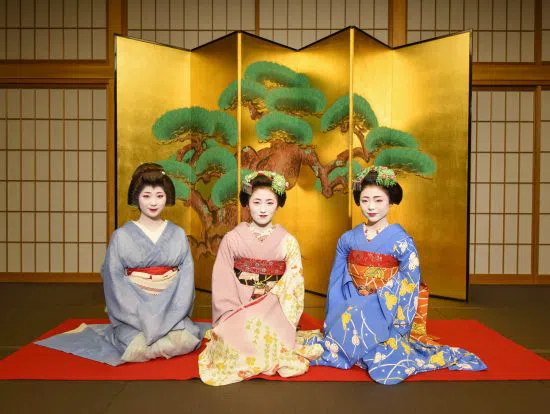
Gion doesn't perform for you. Come at dusk, when the lanterns flick on along Hanamikoji and a geiko clips between engagements in a split-second blur of collar and hem, and you'll understand it's a working district, not a theme park. Most of its teahouses will never open a door to you — and the handful that will are worth knowing exactly. This is how to spend a proper evening here in 2026 without burning money on the wrong room, or standing on a corner ambushing a woman on her way to work.
First, the honest bit about Gion's doors
Gion runs on ochaya — teahouses — and they operate by introduction only. No walk-ins. No exceptions. No amount of cash fixes it if you don't know a regular who'll vouch for you and settle the bill. That isn't snobbery; it's how discretion and payment have worked here for two centuries. So drop any notion of stumbling into a geiko evening by charm alone. It won't happen.
What you can do, and do well, is book one of the few venues built to host outsiders honestly, then drink in the backstreets around them. One more thing, and I mean it: don't chase maiko down Hanamikoji for photos. The private alleys off it are camera-banned and patrolled, fines apply, and it's a grim look on anyone. Watch, don't hunt. Now, the places worth your night.
Plan your Kyoto trip
Live prices from our booking partners.
Free cancellation on many rooms. We may earn a commission when you book.
Meeting a maiko: the evenings you can actually book
If you want to sit in a room with a maiko — talk to her, watch her dance, play the drinking games — you need a venue that hosts strangers by design. Four do it properly, at four very different prices.
The most accessible authentic option is Gion Hatanaka (Gion, near Yasaka Shrine). It's a ryotei that runs a set 'Kyoto Cuisine and Maiko' evening: a shared seated banquet where you eat a proper kaiseki-style meal, watch the dance, then play ozashiki games with the maiko across the table. No ochaya introduction required, English-friendly, and built for groups — which is exactly why it's the pick for a UK party of four to eight who want the real thing without the invitation-only wall. It's the top of the price bracket at roughly ¥19,000 per head (££££), and you book well ahead. Spring and autumn sell out.
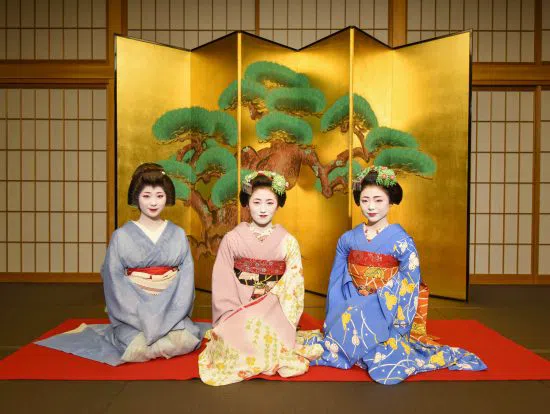
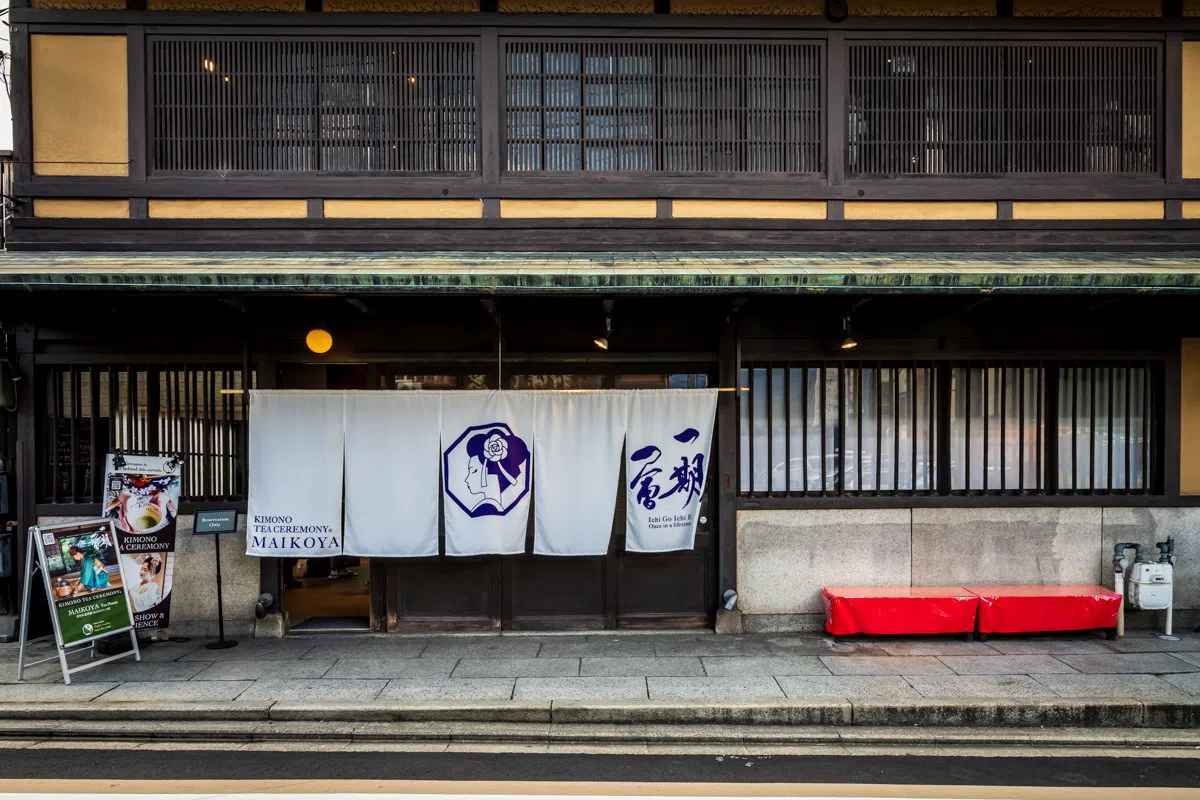
Running it close is MAIKOYA Gion (Hanamikoji, Gion), which stages a geisha dinner show daily inside a protected Hanamikoji teahouse. You get a set-menu dinner with all-you-can-drink and the geisha games, English-guided throughout, and they take both small-group and private bookings. It's reliable and well-organised — the safer diary bet if Hatanaka's full — and, like Hatanaka, it's ££££. Book early for the spring and autumn peaks or you won't get in.
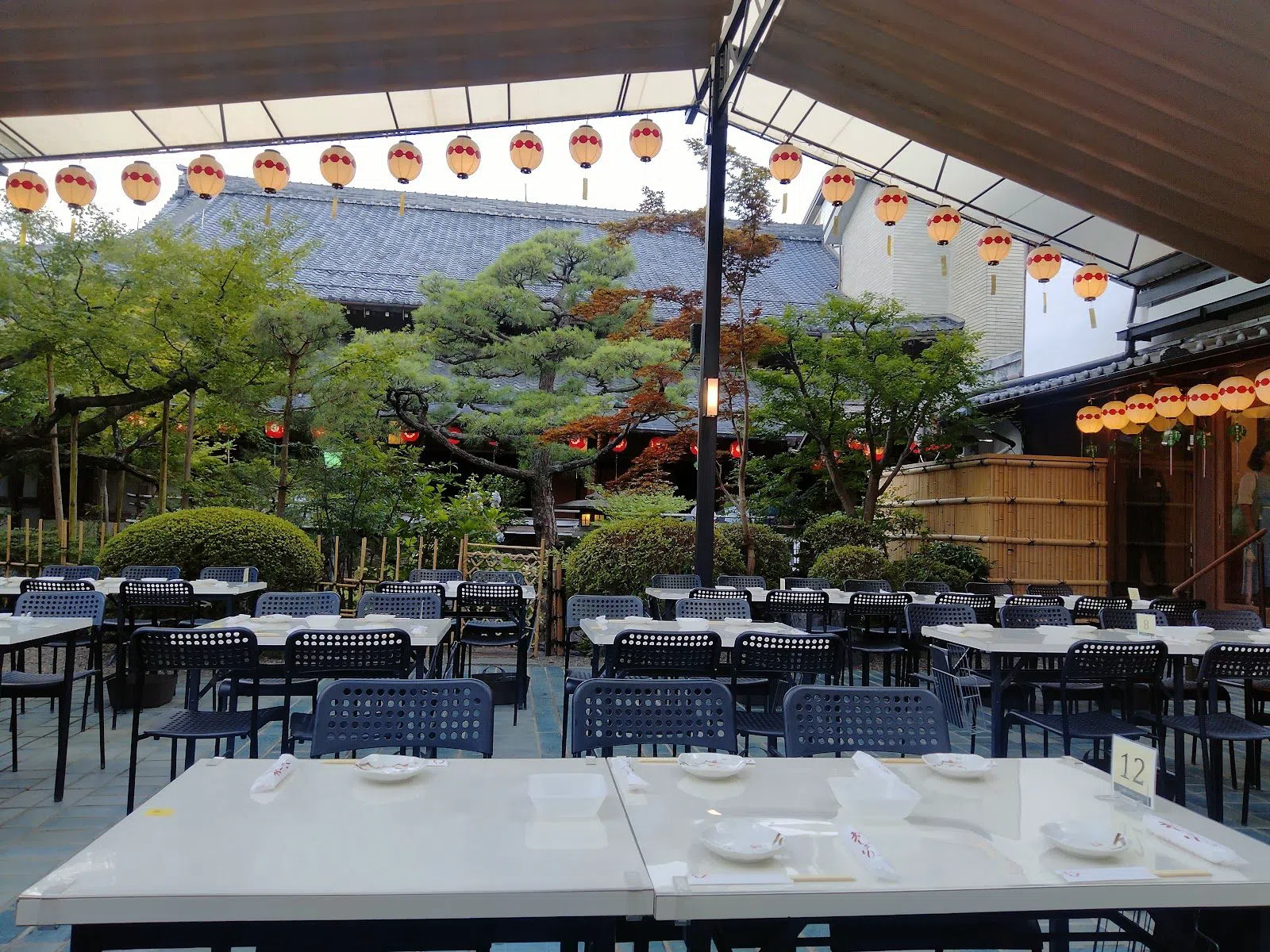
Want to actually share a drink with a geiko for pocket money? Then time your trip for summer and go to the Kamishichiken Beer Garden (Kamishichiken, north-west of central Gion by Kitano Tenmangu). Kyoto's oldest geisha district throws open its rehearsal-hall courtyard as a casual beer garden, and roughly six geiko and maiko work the tables each night, pouring and chatting. The Starter Set is about ¥2,000 including a beer — ££, and by a mile the cheapest genuine contact you'll get. The catch is the window: it runs summer only, roughly 1 July to 5 September, and closes some Saturdays. It's walk-in and group-friendly, no reservation drama. If your dates land in that window, do this.
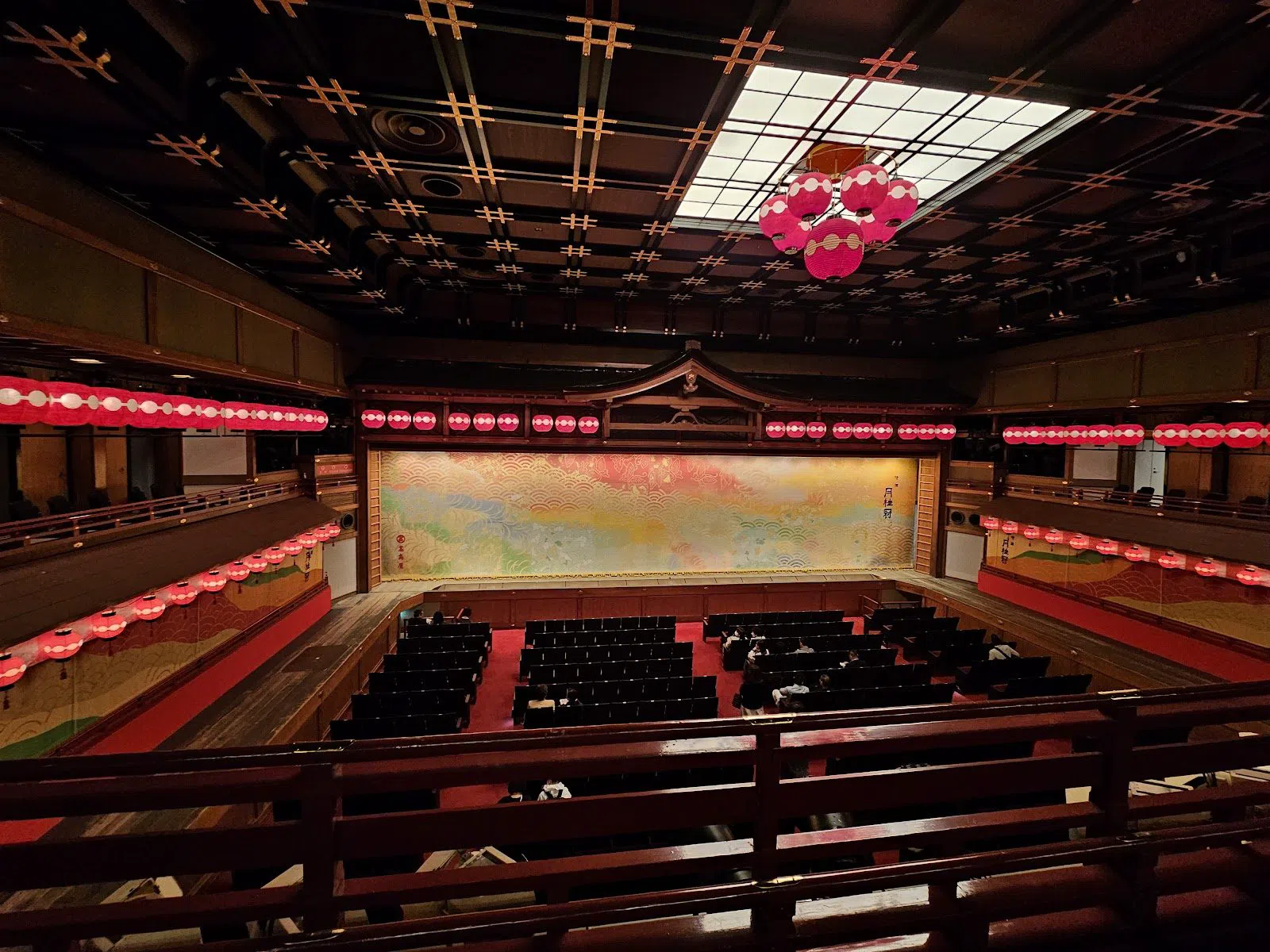
On a budget and travelling any time of year, Gion Corner (the Kobu Kaburenjo annex theatre, Gion) is the honest primer. It's a 50-minute sampler of seven Kyoto arts — tea ceremony, koto, flower arranging, a maiko dance among them — with two shows nightly and a photo with a maiko afterwards. Around ¥3,150 (££), theatre seating that swallows a group without fuss. Yes, it's touristy. It's also a genuine, well-run introduction, and honest about being one. Note the winter schedule: in the cold months it typically runs weekends and holidays only, so check the calendar before you build a night around it.
Down to the river: drinking in Pontocho
A lantern's throw west of Gion, across the Kamo, Pontocho is the narrow parallel-to-the-river alley where you'll actually spend the drinking half of the night. It's one lane wide, wooden machiya on both sides, and in summer the restaurants build kawadoko platforms out over the water. Most of the ochaya rules apply here too — plenty of doors won't open — but there's a solid run of bars that welcome you.
Start at Bar Pontostand (Pontocho), the easy first stop. Bilingual, casual, walk-in friendly, and it does fruit-infused sake that goes down without ceremony — the right unintimidating opener for a group easing into the alley before anyone's brave enough for a proper cocktail den. It's ££–£££ and nobody will make you feel you've walked into the wrong room.
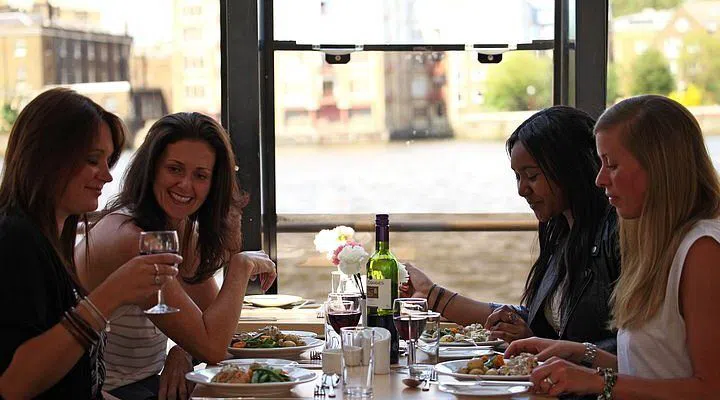
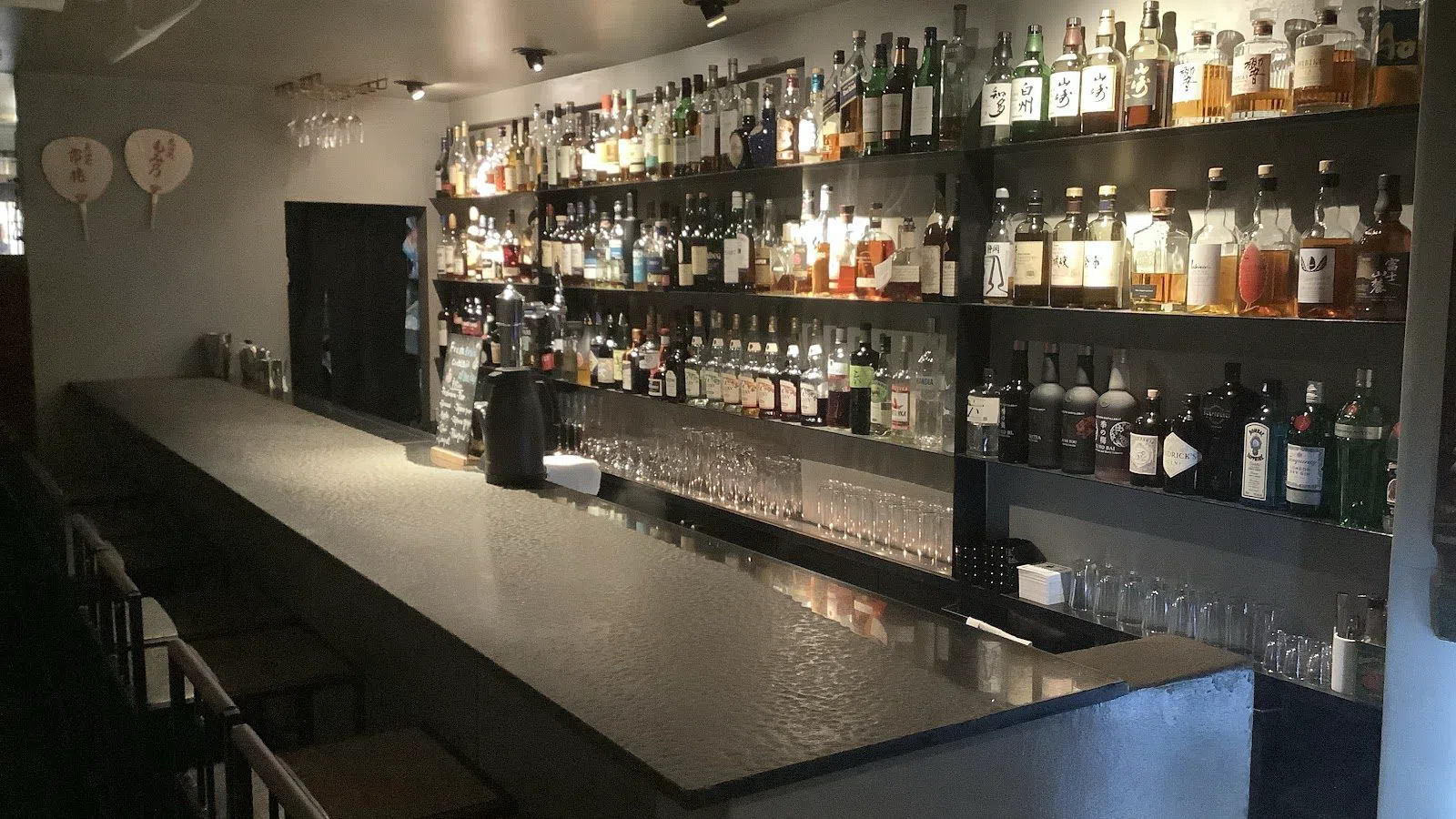
The standout drink in the whole district, though, is Bar Atlantis (Pontocho, riverside). It's the rare Pontocho bar with a genuine deck over the Kamogawa — open roughly May to September — plus 400-odd whiskies behind the counter. Order the signature 'Kamogawa Lemon', get a spot on the terrace, watch the river go by. It's livelier and younger than most of the alley, £££, and the terrace is compact and popular, so either go early or reserve. Turn up at nine on a Saturday in July with six people and no booking and you'll be turned away.
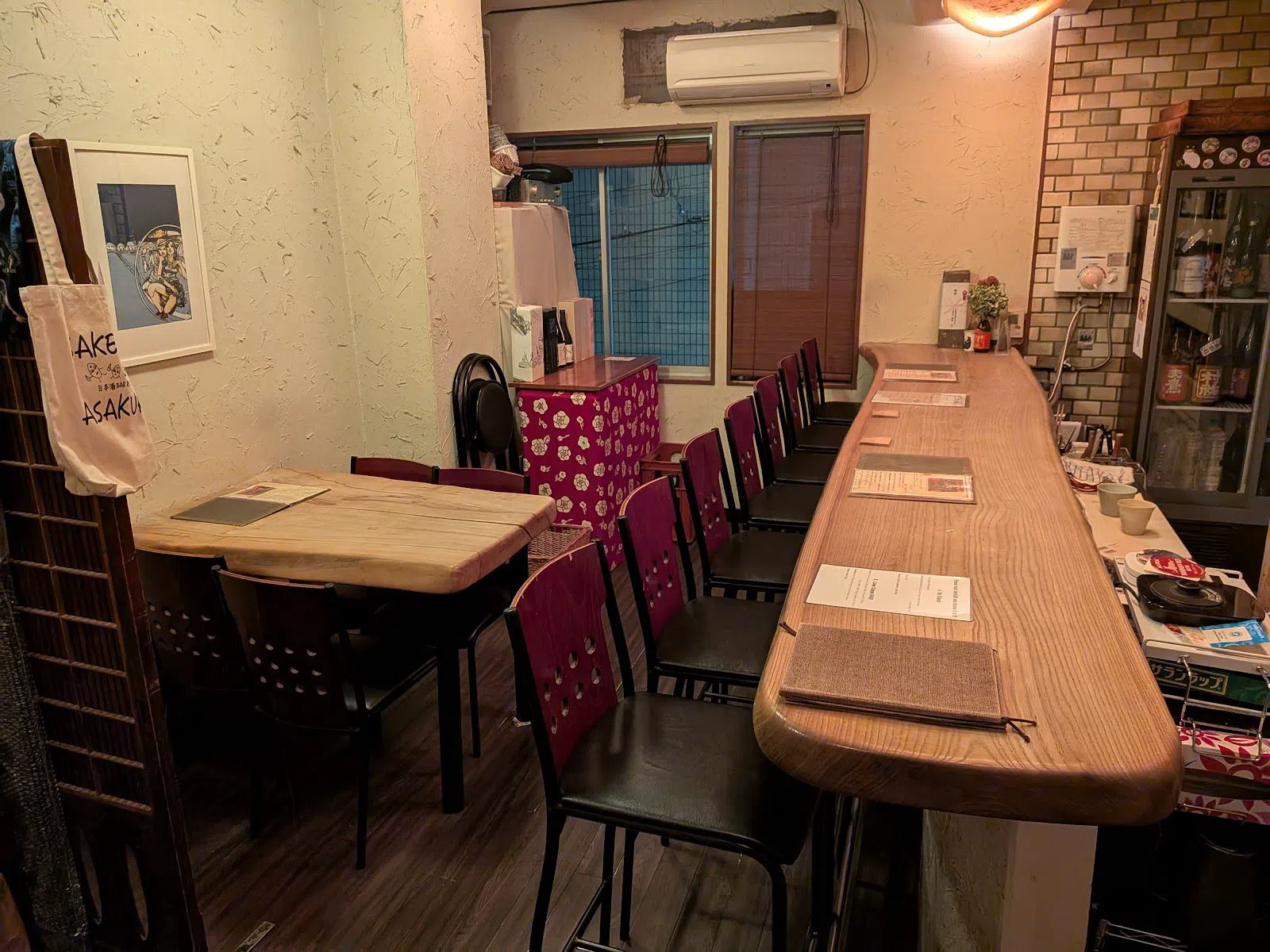
When you want to understand what you're pouring rather than just pour it, walk to Sake Bar Asakura (near Pontocho). It's a small counter bar run by a genuinely expert owner who does English-guided nihonshu flights — you'll leave knowing a junmai from a daiginjo and why the water matters. £££, best for pairs and small groups given the counter's size. This is the thinking drinker's stop, and the one I'd send anyone who says they 'don't get sake'.
The hidden cocktail dens off Kiyamachi
One street west again, along the Takase canal, Kiyamachi hides Kyoto's serious cocktail bars. These are small rooms and craft-led — brilliant for two to five people, wrong for a stag mob of ten.
The connoisseur's choice is Bar Rocking Chair (a backstreet off Kiyamachi). It's the workroom of a World Cocktail Championship–winning bartender, tucked away with under thirty seats, and it's a proper quiet counterpoint to the tourist alleys — the place to go when you want a serious, considered drink and conversation you can hear. Cocktails run about ¥1,500 plus an ¥880 cover (£££). Small groups of two to five only; don't roll up mob-handed.
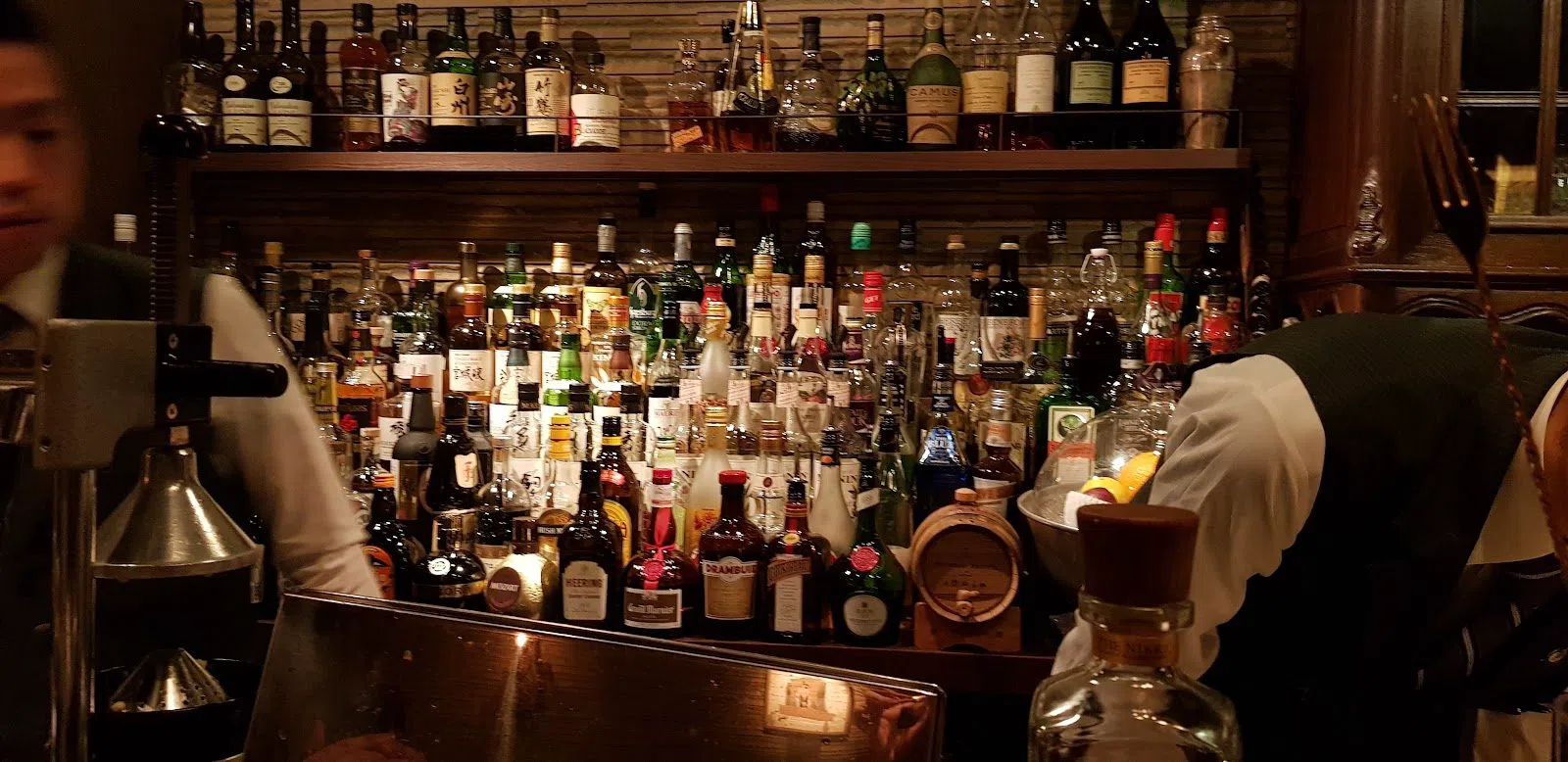
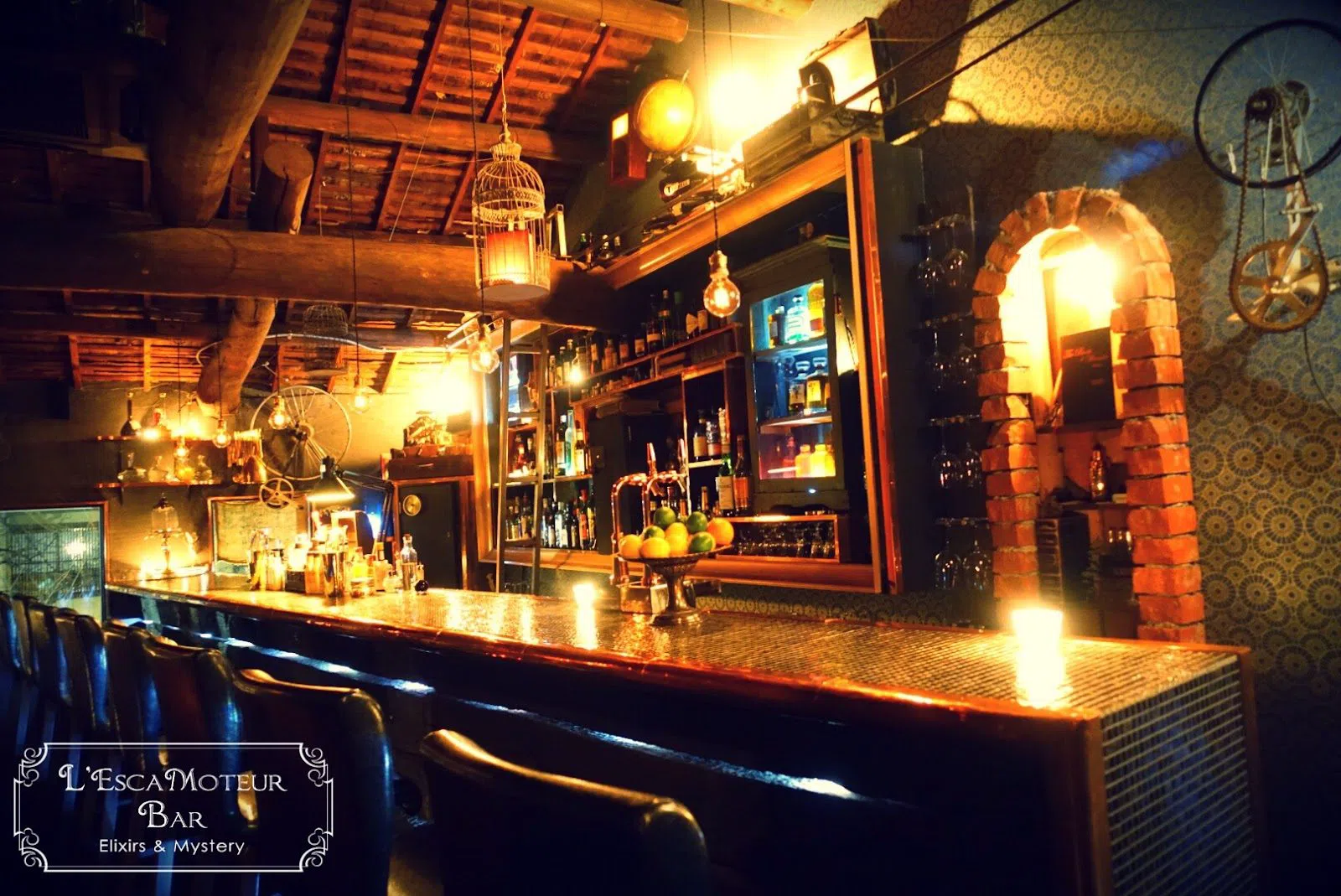
For theatre, L'Escamoteur Bar (Kiyamachi, steps from Pontocho) is a magician-owned 'elixir' bar — smoke, potions, showmanship, the lot. It's tiny at around twelve seats, no reservations, walk-ins only, so come as a pair or trio and come early. Open Tuesday to Sunday from 8pm, £££. It's a memorable one-off if you want atmosphere over a hushed drink; if you want the hushed drink, that's Rocking Chair.
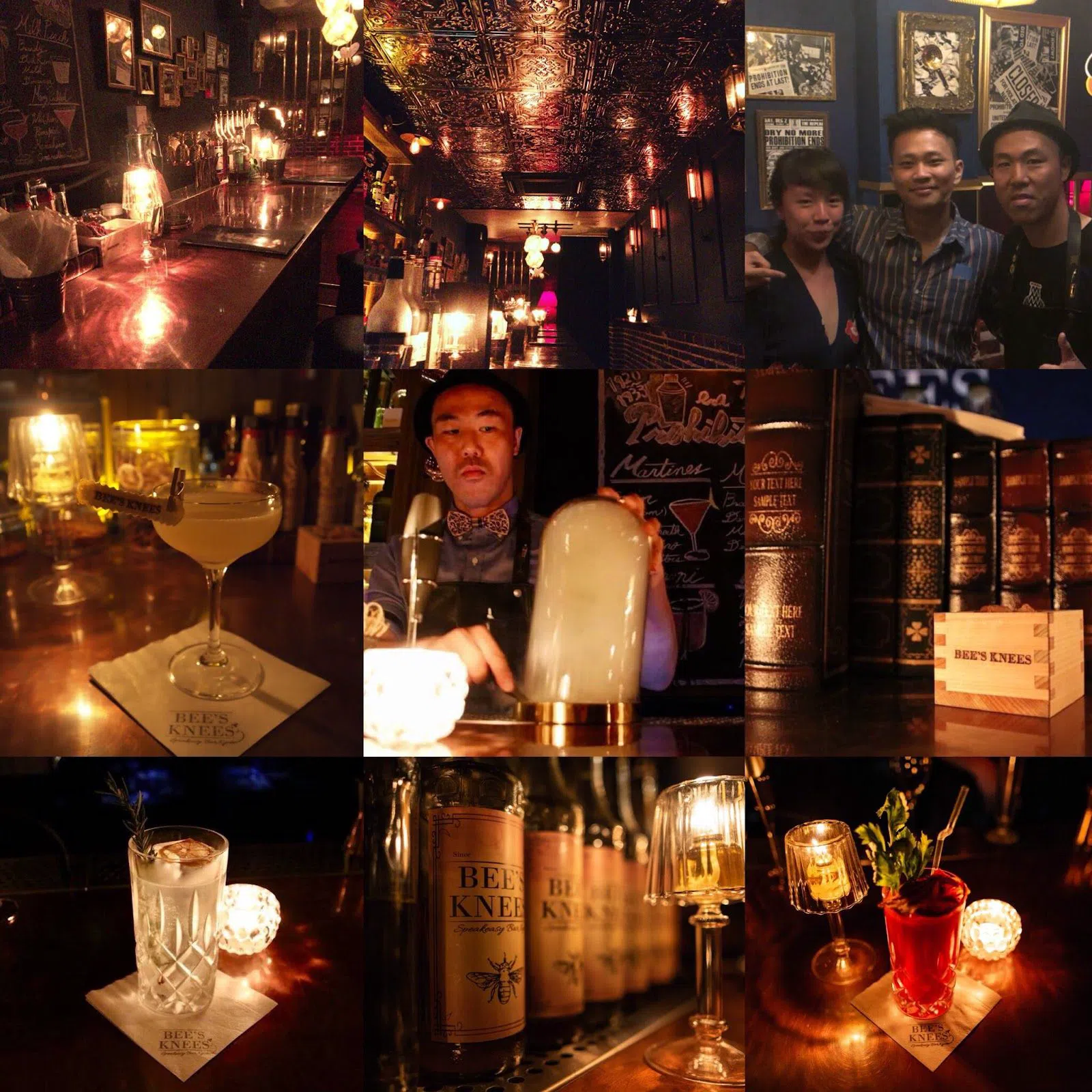
And on Asia's 50 Best Bars list, Bee's Knees (near Kiyamachi) does Prohibition-era cocktails built on Kyoto ingredients — the Ki No Tea gin 'Astronaut' is the one to order. Around fourteen seats, walk-ins after 6pm, no reservations, closed Sundays, £££. Half the fun is finding the secret door, so leave a few minutes to hunt for it. Small groups only, same as the rest of this street.
A relaxed base for a bigger group
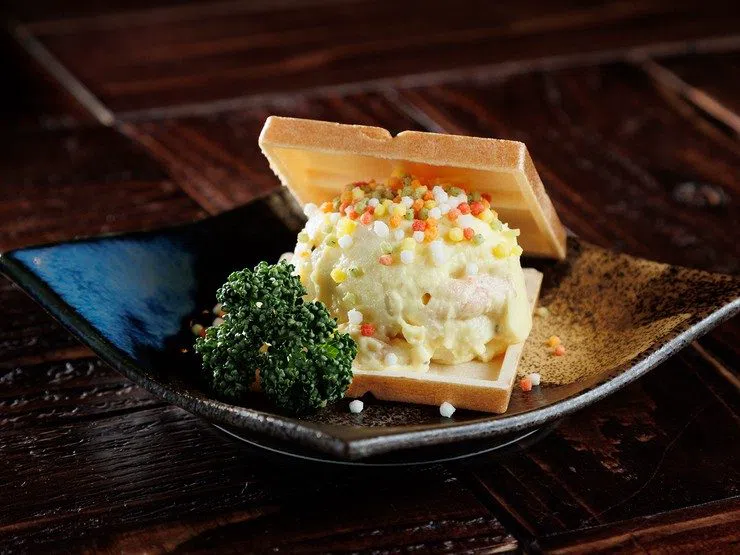
If your party's too big for the cocktail dens and you want somewhere you can actually all sit down, go to Yamaneko Gion (Gion). It's a restored Gion teahouse turned craft beer and sake izakaya — seven Kyoto craft beers, 50-plus sakes, themed nights, sometimes live music, and food that's a real cut above the drink-only spots. Ground floor seats 23, and there's a second-floor sofa area that holds up to about ten. ££–£££. In a district that's mostly exclusive counters and turned-away doors, this is the rare relaxed, group-sized room where nobody's checking whether you belong. Make it your anchor and fan out from there.
If the language wall beats you
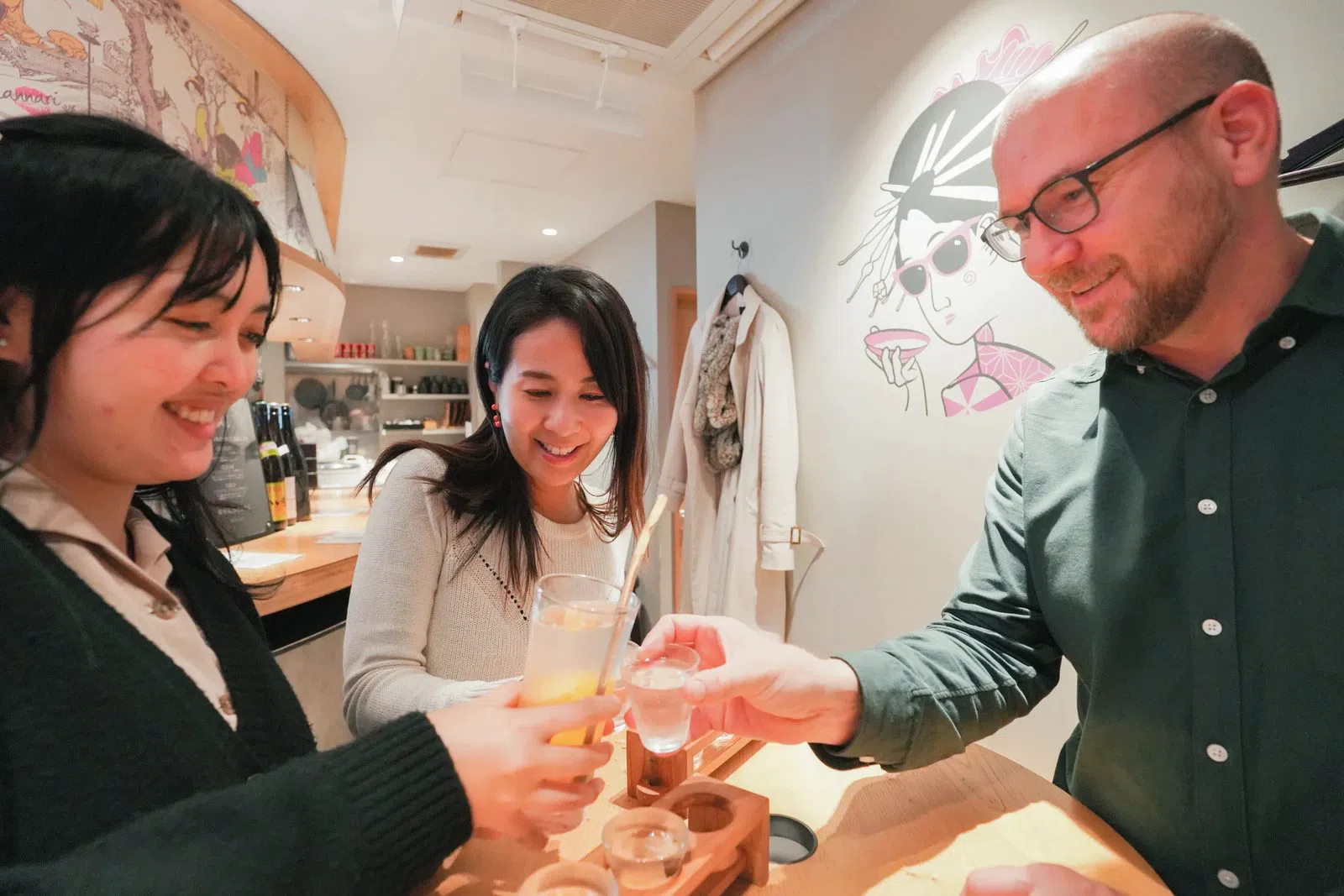
Here's the honest problem for a lot of UK visitors: the best backstreet bars are small, Japanese-first, and instinctively wary of tourists who don't know the etiquette. If that door policy and the language gap are going to defeat you — and for many first-timers they do — book the MagicalTrip Kyoto Pub Crawl (Pontocho and Gion hidden alley bars). It's a purpose-built small-group evening: 3.5 hours, a local English-speaking guide, two izakayas plus one genuinely hidden bar, with food and drinks included. £££. It solves the exact barrier that keeps you out of these places on your own — the language and the no-tourists reflex — and it's well reviewed for a reason. Do it on your first night and you'll drink better on the ones after, because you'll know how the rooms work.
The practical bit
Getting there and back. Gion and Pontocho share two transport hubs a few minutes apart: Gion-Shijo on the Keihan line and Kawaramachi on the Hankyu line, both right on Shijo-dori at the west edge of Gion. Trains and the city subway stop around midnight — plan to be at the platform by about half eleven if you're relying on them. Miss that and taxis are plentiful along Shijo and Kawaramachi-dori and not badly priced across the compact centre; there's no Uber culture to lean on, so just flag one or use the GO app.
Cash. Bring it. Japan is far more card-friendly than it was, but the small counter bars — Rocking Chair, L'Escamoteur, Bee's Knees, Asakura — are exactly the sort of places that stay cash-first, and several add a seat cover charge (Rocking Chair's is ¥880) that catches people out. Carry enough yen for the night and don't assume your contactless will save you at 11pm.
Timing. Gion's magic hour is dusk — arrive around 5.30–6pm for the lantern light and the between-engagements glimpses, eat or do your maiko booking early evening, then move to the water and the cocktail bars from nine. The speakeasies don't open till 8pm anyway.
Budget, roughly. A maiko dinner is the splurge — reckon ¥19,000pp at Gion Hatanaka or MAIKOYA. Everything else is gentler: Gion Corner around ¥3,150, the Kamishichiken beer garden starter about ¥2,000, cocktails ¥1,500-ish plus covers. A realistic honest night that skips the banquet — a couple of Pontocho drinks, one cocktail den, a plate at Yamaneko — lands somewhere around ¥6,000–8,000 a head.
Where to stay. Base yourself within walking distance of Shijo-dori so the last-train question never bites — start your Kyoto hotel search around Gion, Kawaramachi or Karasuma. And for everything beyond after-dark — temples, the arcades, day trips — the wider Kyoto guide has the rest of the city mapped. Gion won't perform for you. Turn up on its terms, though, and it's the best evening in Japan.
Before you go
Can you just walk into a teahouse in Gion and see a geisha?
No. Gion's ochaya (teahouses) work by introduction only — no walk-ins, whatever your budget. To meet a maiko as a visitor you book a venue built to host outsiders, such as Gion Hatanaka or MAIKOYA Gion for a dinner, the summer Kamishichiken Beer Garden for a casual drink, or Gion Corner for an arts show.
How much does a maiko dinner experience in Gion cost in 2026?
The full authentic maiko evenings — a kaiseki-style banquet, a dance and drinking games — run around ¥19,000 per person (££££) at Gion Hatanaka and MAIKOYA Gion. Cheaper alternatives include the Kamishichiken Beer Garden starter set at about ¥2,000 and Gion Corner at around ¥3,150.
Is it OK to photograph maiko and geiko in Gion?
Not in the private alleys. The backstreets off Hanamikoji are camera-banned and patrolled, and fines apply for chasing or photographing geiko on their way to work. Watch from the main streets, and if you want photos, most booked experiences — including Gion Corner — include a proper photo with a maiko afterwards.
Which Gion and Pontocho bars are good for groups versus couples?
Groups: Yamaneko Gion (seats 23 downstairs), Bar Pontostand, and the walk-in Kamishichiken Beer Garden. Couples and small groups of 2–5: the counter bars — Bar Rocking Chair, L'Escamoteur, Bee's Knees and Sake Bar Asakura — are small and often walk-in only. Bar Atlantis takes groups on its riverside deck but book ahead.
What time do the last trains leave central Kyoto near Gion?
Trains and the subway stop around midnight, so aim to be on the platform by about 11.30pm. The two nearest hubs are Gion-Shijo (Keihan line) and Kawaramachi (Hankyu line), both on Shijo-dori. After that, taxis are plentiful along Shijo and Kawaramachi-dori.