The Kyoto issue
The Wooden Bones of Kyoto: Inside the Machiya That Refuse to Vanish
A slow, honest guide to sleeping, eating and working inside Kyoto's endangered wooden townhouses — and which ones actually suit couples, families and groups.
By Tomas AlmeidaKyoto's temples, backstreets and slow mornings
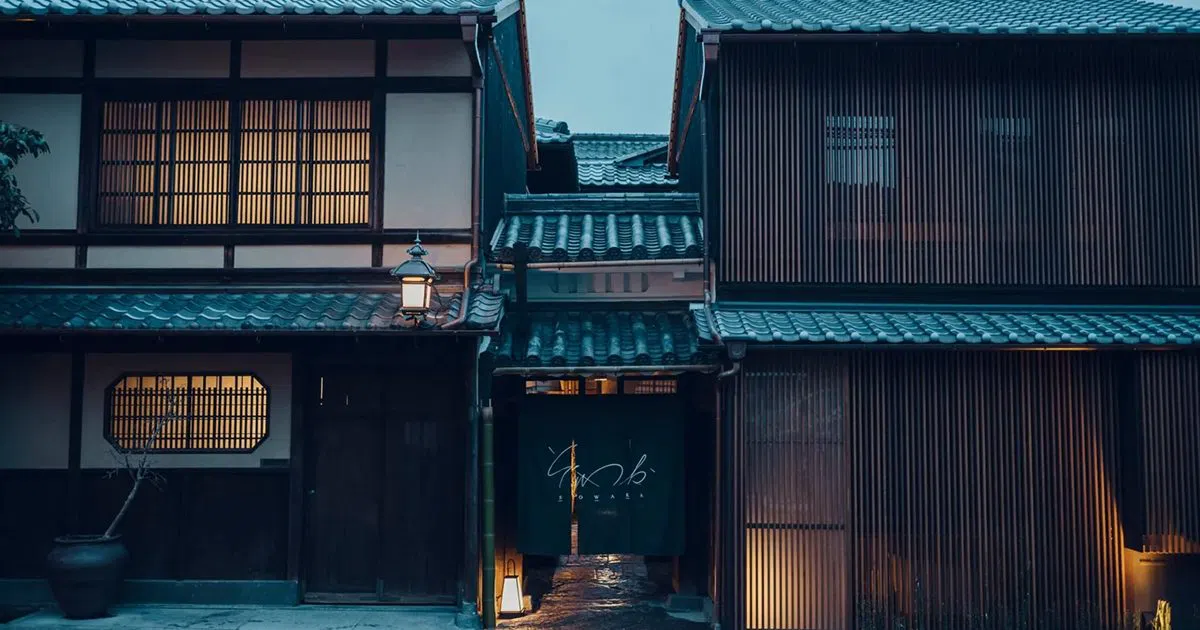
Come to a machiya at dusk, when the lattice fronts throw their shadows long across the stone and the paper screens begin to glow from within like lanterns. These narrow wooden townhouses — some pushing a century and a half, most younger, and nearly all of them quietly endangered — are the true grammar of Kyoto, a city that has always built in timber and lived by the turn of the seasons. To sleep, eat, and repair a broken bowl inside one is to understand the place from the inside out, in a way no temple queue ever quite allows.
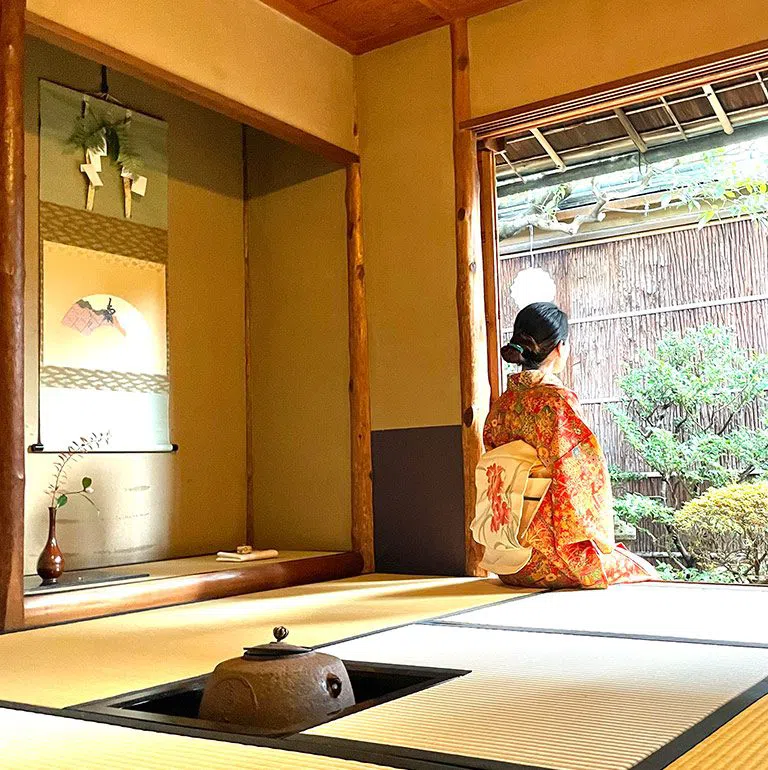
The machiya was an ingenious answer to a medieval tax on street frontage: slender at the road, deep as a tunnel behind, with a tōriniwa earth passage running the length of it and one or two hidden gardens pulling light and air into the middle. For decades they were demolished at a rate that made preservationists despair — a few thousand vanish every year to parking lots and prefab apartments. What has saved a fraction of them is, of all things, tourism: a wave of restorers and hoteliers who worked out that a traveller will pay to stay inside history if it is done with restraint. This guide walks you through the best of that revival, grouped the way you might actually plan a trip, and it is honest about which houses welcome a whole boisterous group and which are built for two people and a long silence. For a wider view of the city beyond its timber, keep the Kyoto guide open alongside this one.
Sleeping inside the wood: for couples and quiet pairs
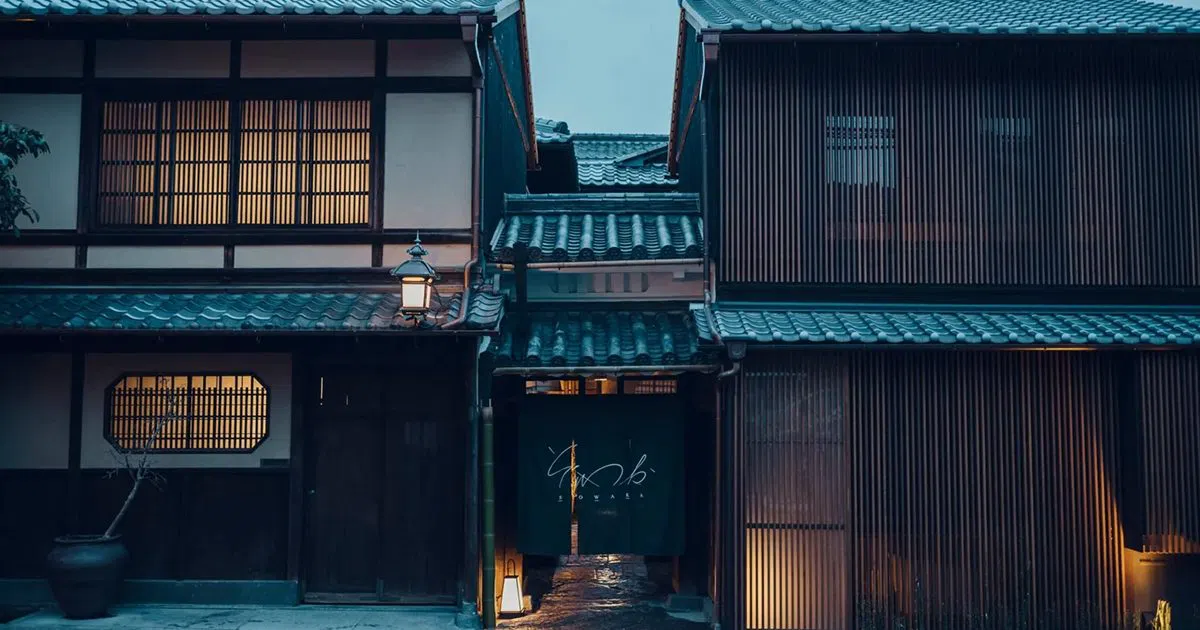
If you are travelling as a couple and want the machiya experience with the reassurance of staff, a front desk, and someone to explain the bath, start in Gion. Sowaka (Gion) is the benchmark — a genuinely restored teahouse rebuilt into a 23-room boutique hotel, with a Michelin-pedigree restaurant on the site and interiors that treat old timber as something to frame rather than gut. It is comfortable for couples and small families, and a few travelling together can request adjacent rooms, but understand what it is not: this is not a house for a large or rowdy party, and its calm is the whole point. Expect roughly ¥60,000–130,000 a night, and book well ahead — Gion's best rooms go months in advance, especially around the autumn colour and the spring blossom.
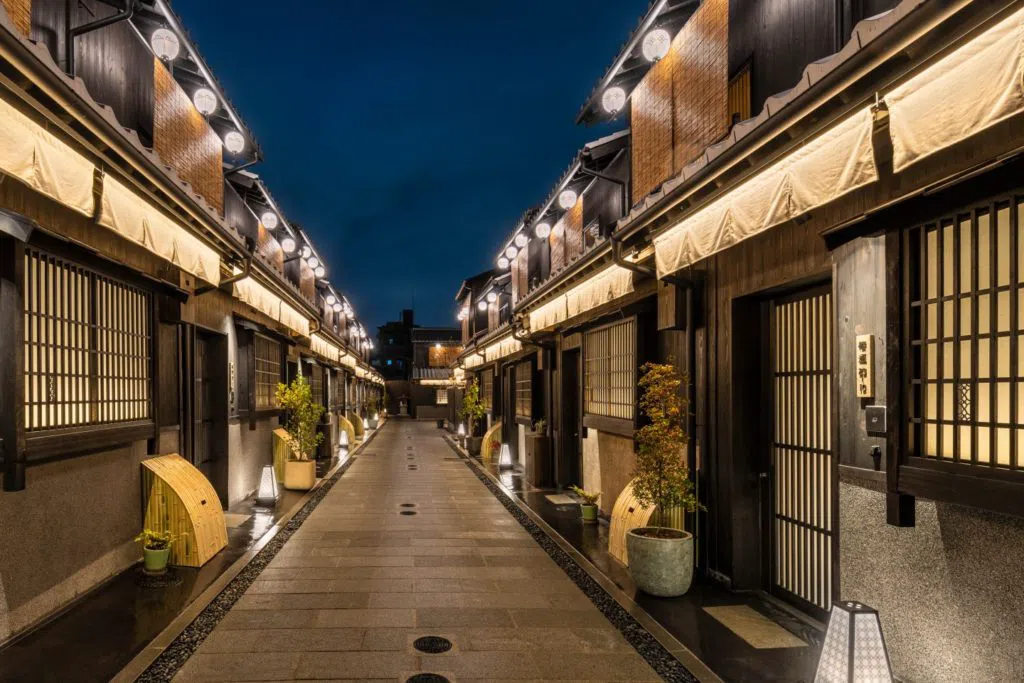
A different, more adult register waits at Nazuna Kyoto Tsubaki St. (west of Kyoto Station), where an entire restored laneway of machiya has been turned into a ryokan of just 23 rooms, each with its own private in-room bath. That last detail matters for two reasons. It gives couples a genuinely sealed-off privacy that larger ryokan cannot, and — because the baths are private — it is one of the very few places in the city that is comfortably tattoo-friendly, a real consideration in a country where public baths still turn ink away. A group can take several rooms along the same alley and effectively colonise the lane, but each room is sized and priced for a couple, at roughly ¥50,000–130,000 a night. Come here when you want ceremony and seclusion in equal measure.
Plan your Kyoto trip
Live prices from our booking partners.
Free cancellation on many rooms. We may earn a commission when you book.
Sleeping inside the wood: whole houses for families and small groups
The moment your party grows past two, or you simply want a kitchen and a garden and no lobby at all, the calculus changes and the whole-house rental comes into its own. The purist's choice is Iori Machiya Stay (scattered through the central machiya districts), the Alex Kerr portfolio widely credited with starting the modern machiya-rental movement in the first place. These are the least-intervened restorations in the city — low lighting, real materials, the deliberate imperfections left in — and the larger houses sleep families and small groups of roughly six to eight. Rates start around ¥45,000 a night. Choose Iori if authenticity outranks amenities; the trade-off is that these houses ask something of you in return, a willingness to live a little more slowly and simply than a hotel would ever demand.
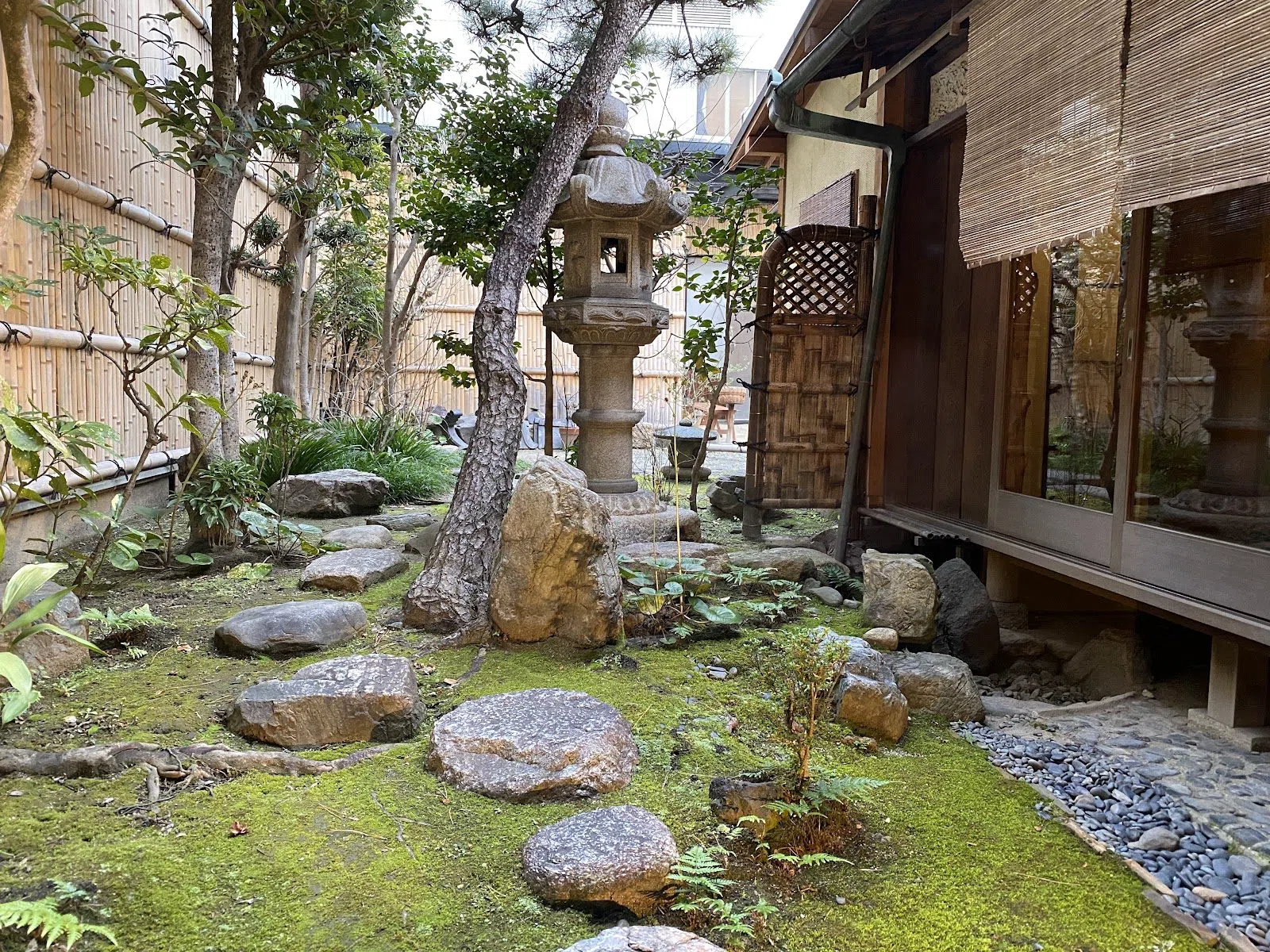
For travellers who want that same museum-grade minimalism with a design-magazine sheen, Maana Homes (in the temple-lined lanes below Kiyomizu-dera and along the Kamo) offers whole-house private rentals — Maana Kyoto, Maana Kamo, Maana Kiyomizu — sleeping two to six. These are the houses the design press keeps photographing, all pared-back lines and considered emptiness, and they suit a family or a small group taking an entire machiya to themselves for around ¥45,000 to ¥100,000-plus a night. What you are paying for is restraint, not room service; if you need a concierge and a breakfast buffet, look elsewhere.
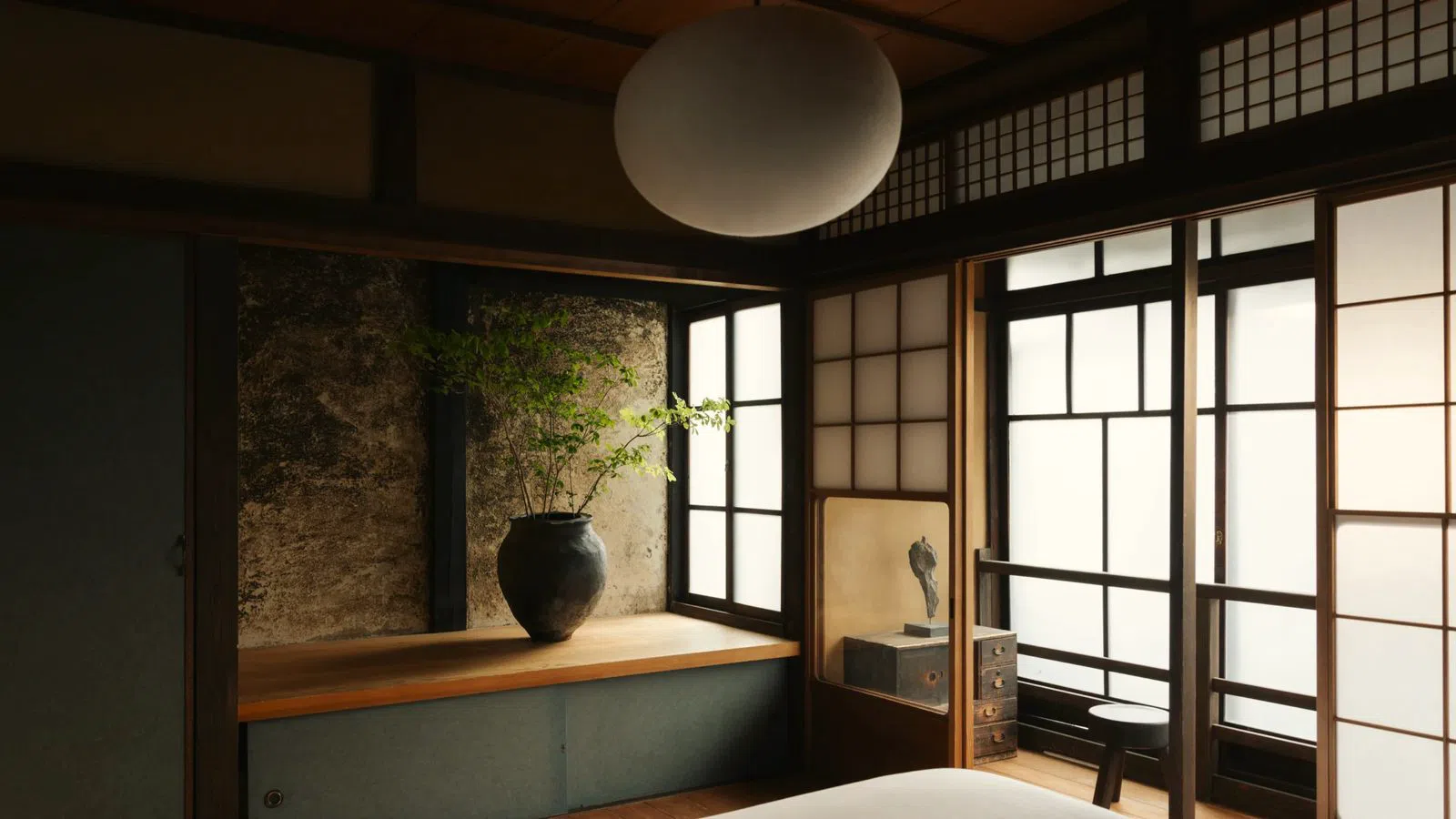
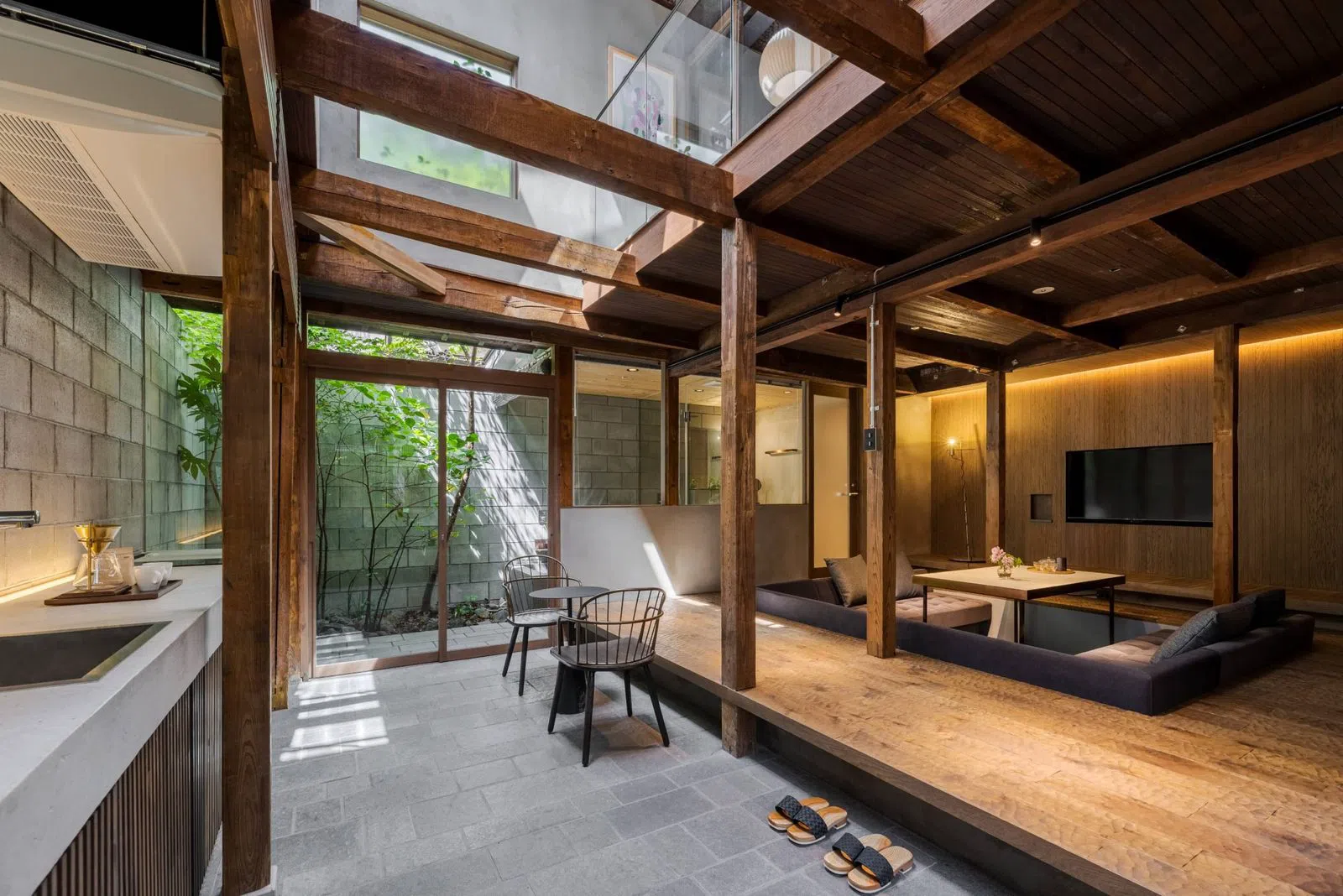
The most practical group option, and the one I point larger parties toward without hesitation, is Machiya Residence Inn (central Kyoto, several houses near Gion or the station) from the Machiya Inns & Hotels stable. This is explicitly the family and group choice: more than sixty whole houses in the inventory, several sleeping up to six to ten, each with a kitchen, laundry, and garden, plus an English- and Japanese-speaking guest-services line for when the bath controls defeat you. Rates run roughly ¥35,000 to ¥90,000-plus for a whole house. When a group wants to cook one night, spread out across tatami, and still walk to Gion for dinner, this is the pragmatic pick — the widest choice of self-catering machiya in the city, and the least precious about how you use them.
Eating and pausing in a townhouse
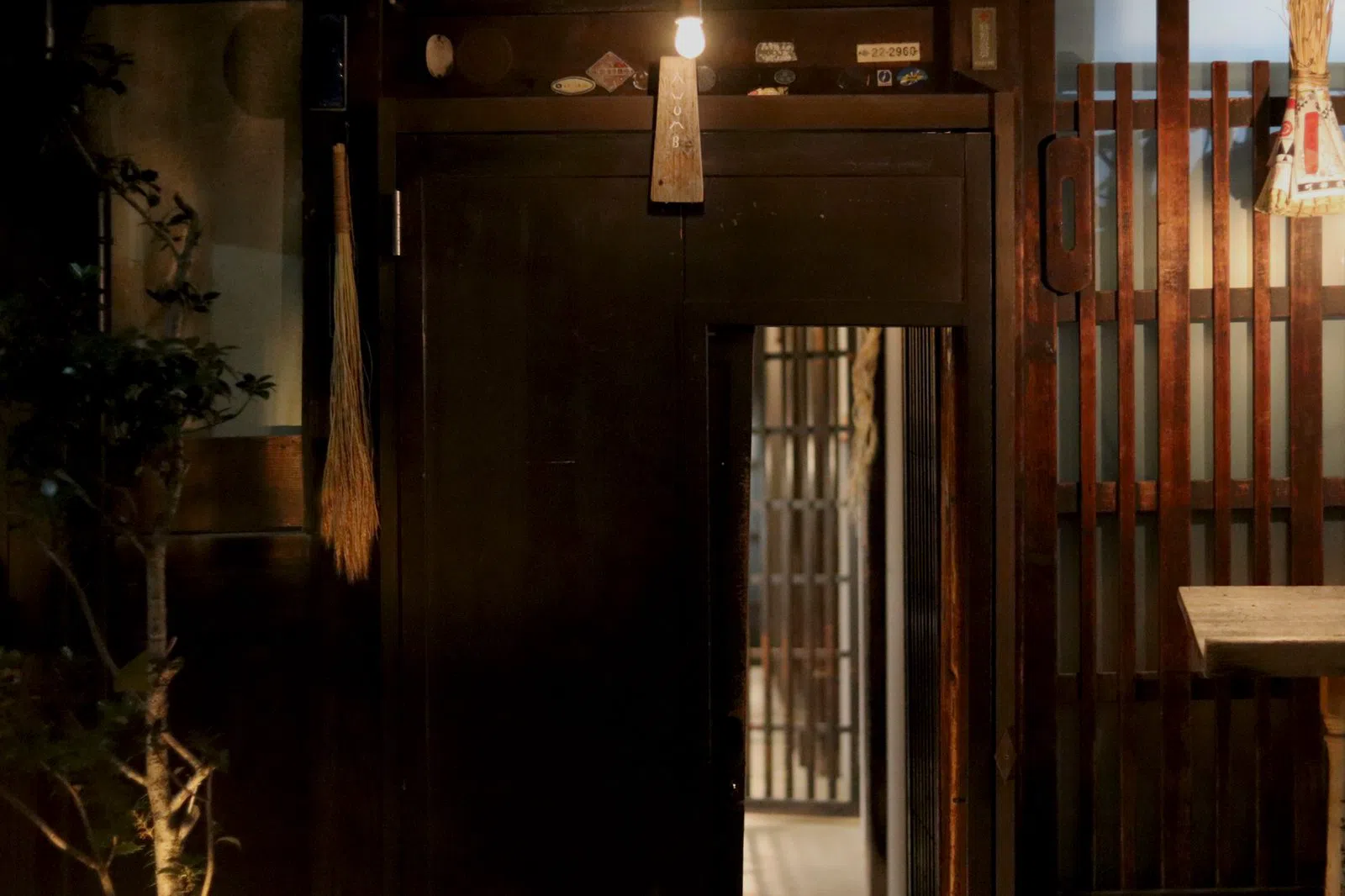
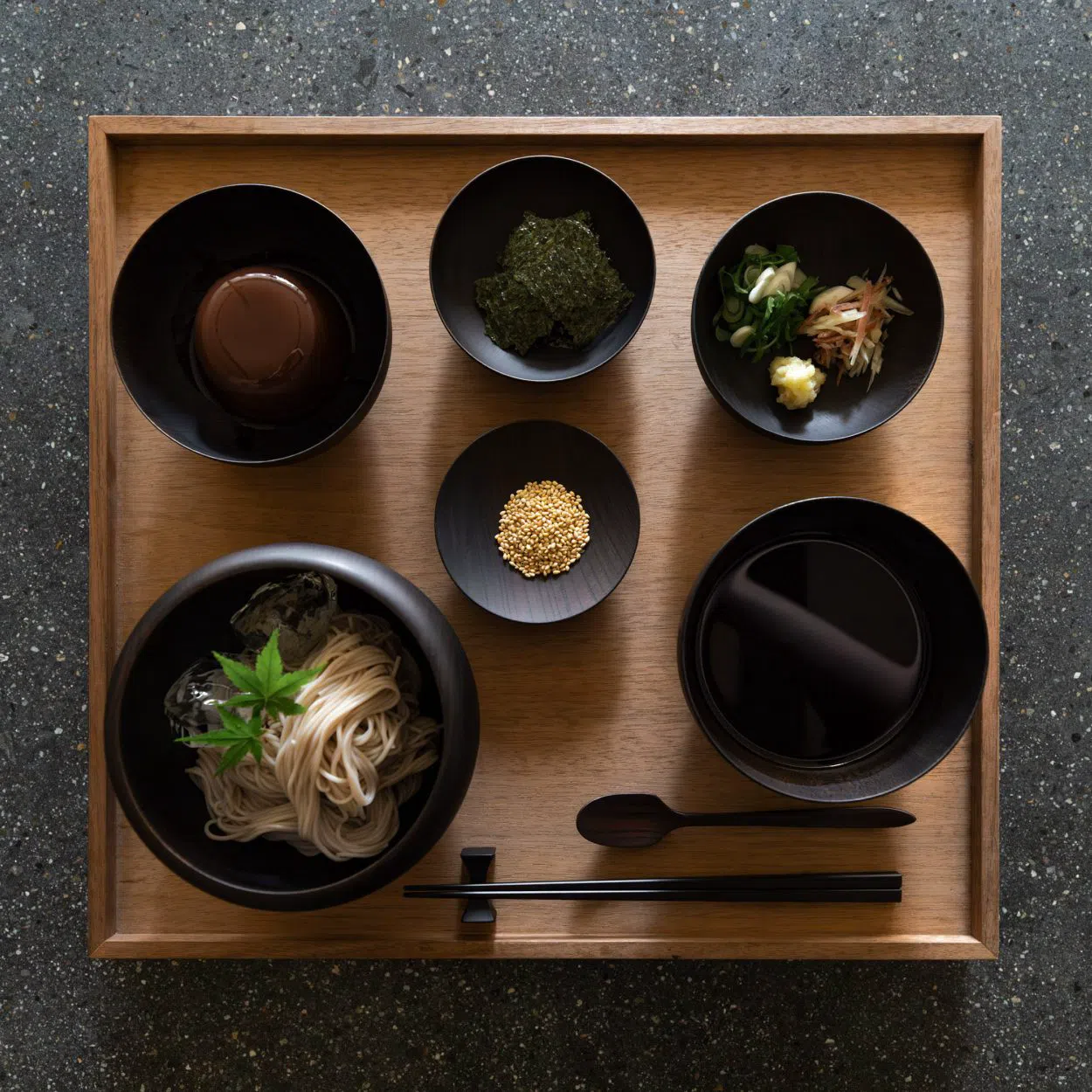
A machiya reveals itself differently over a meal, when you sit in the long room and watch the light move across the inner garden. The most photogenic table in the city belongs to AWOMB Karasuma Honten (Karasuma), home of teori sushi — a build-your-own arrangement of small ingredients laid out like a painter's palette that you fold into rice and nori yourself. The lunch omakase runs roughly ¥4,000–6,000 a head, and the format makes it one of the easiest fine meals in Kyoto for vegetarians, who so often struggle here with hidden dashi. Be warned, though: it is reservation-only and genuinely intimate, fine for a few friends but hard to seat a large party, so book ahead and keep numbers modest.
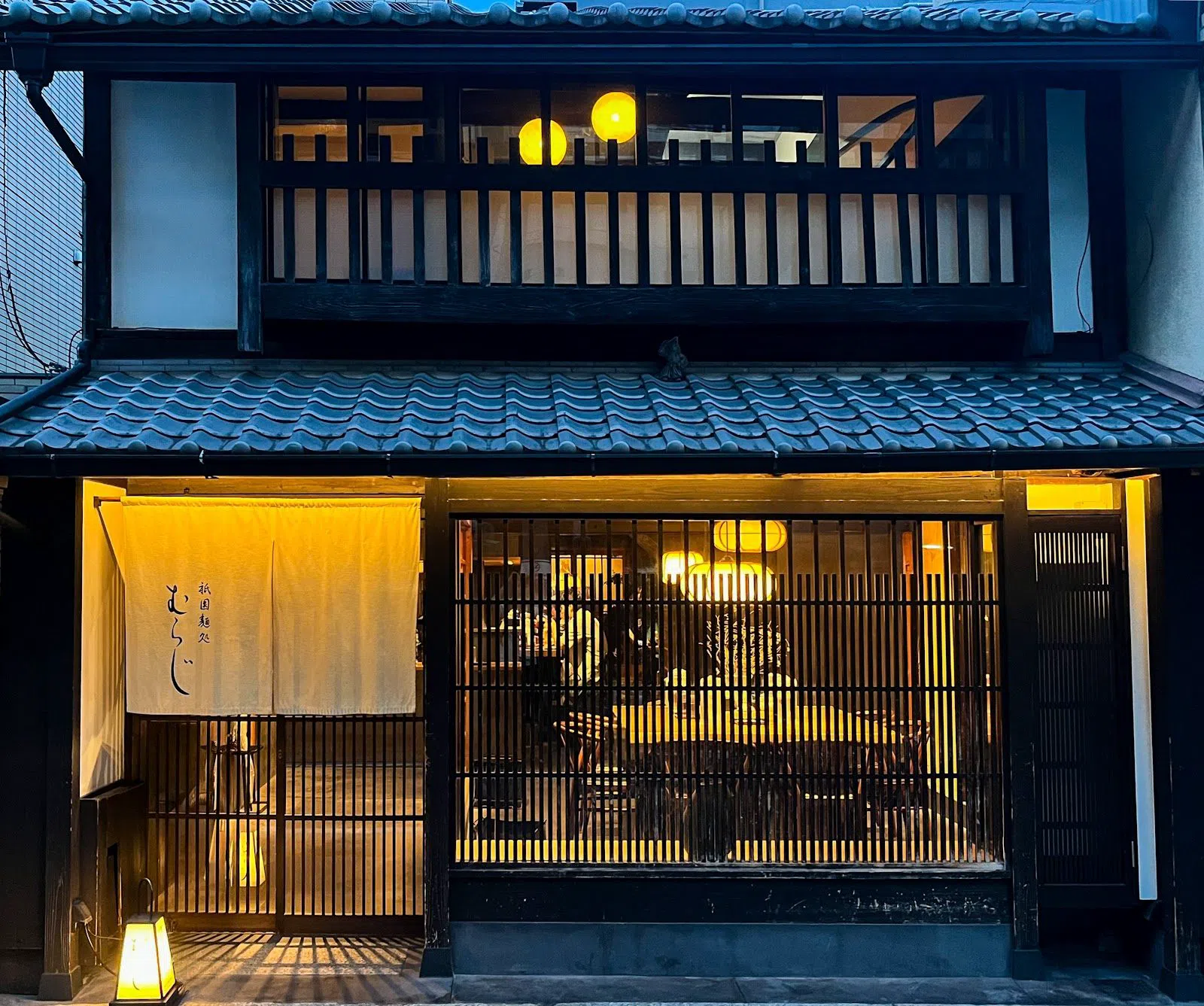
For something warmer and far cheaper, walk toward Nishiki Market and find Ramen Muraji (near Nishiki), a rare machiya bowl that is refined without being expensive — a counter and a handful of small tables, around ¥1,200–2,000 a head. The draw is the lemon chicken-paitan ramen, a bright, clean take on a rich style, and the queue tends to move quickly. It is casual and mostly walk-in, best for pairs and small groups; a big party will struggle to sit together, so split up or come at the edges of the lunch rush.
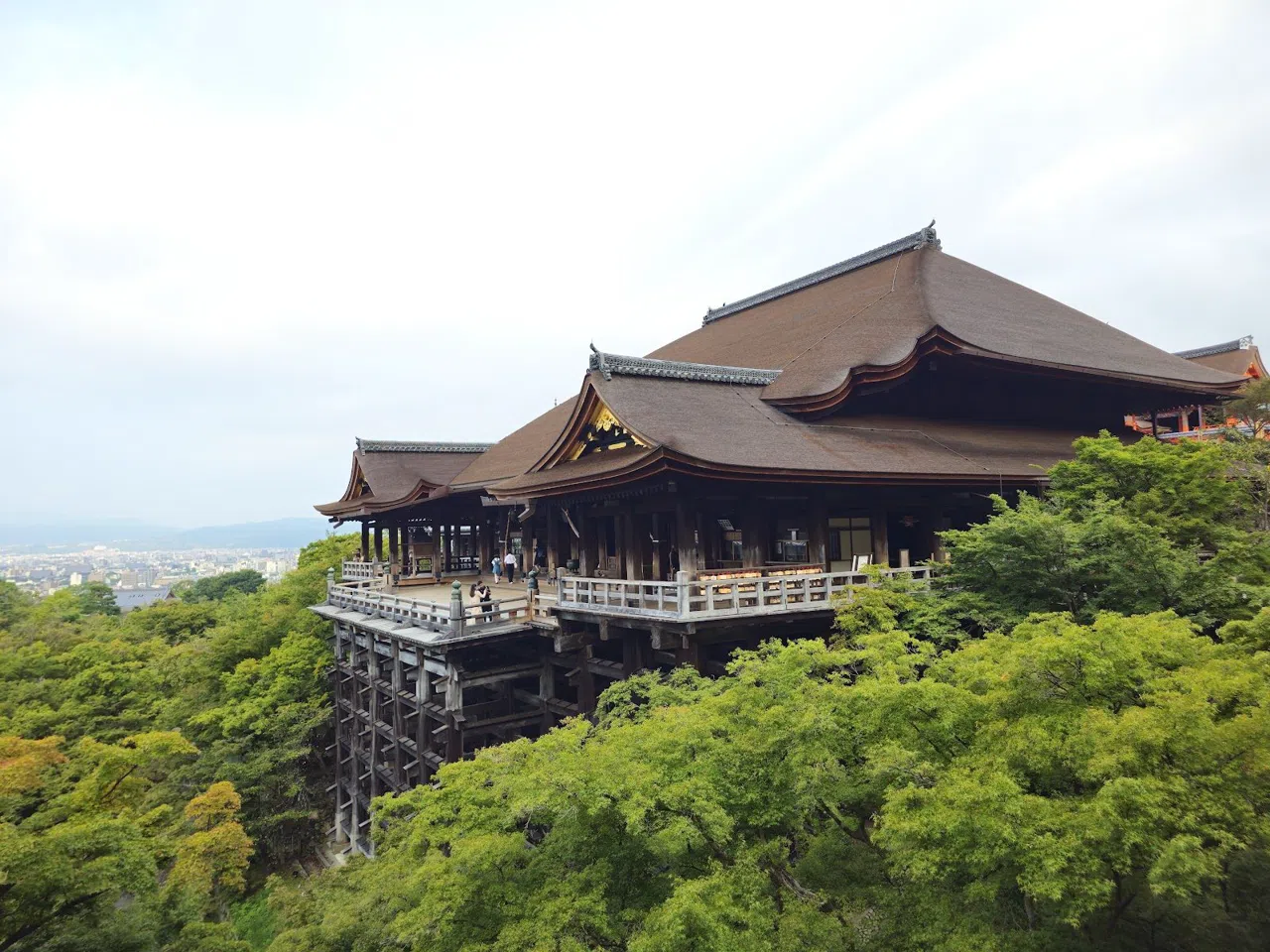
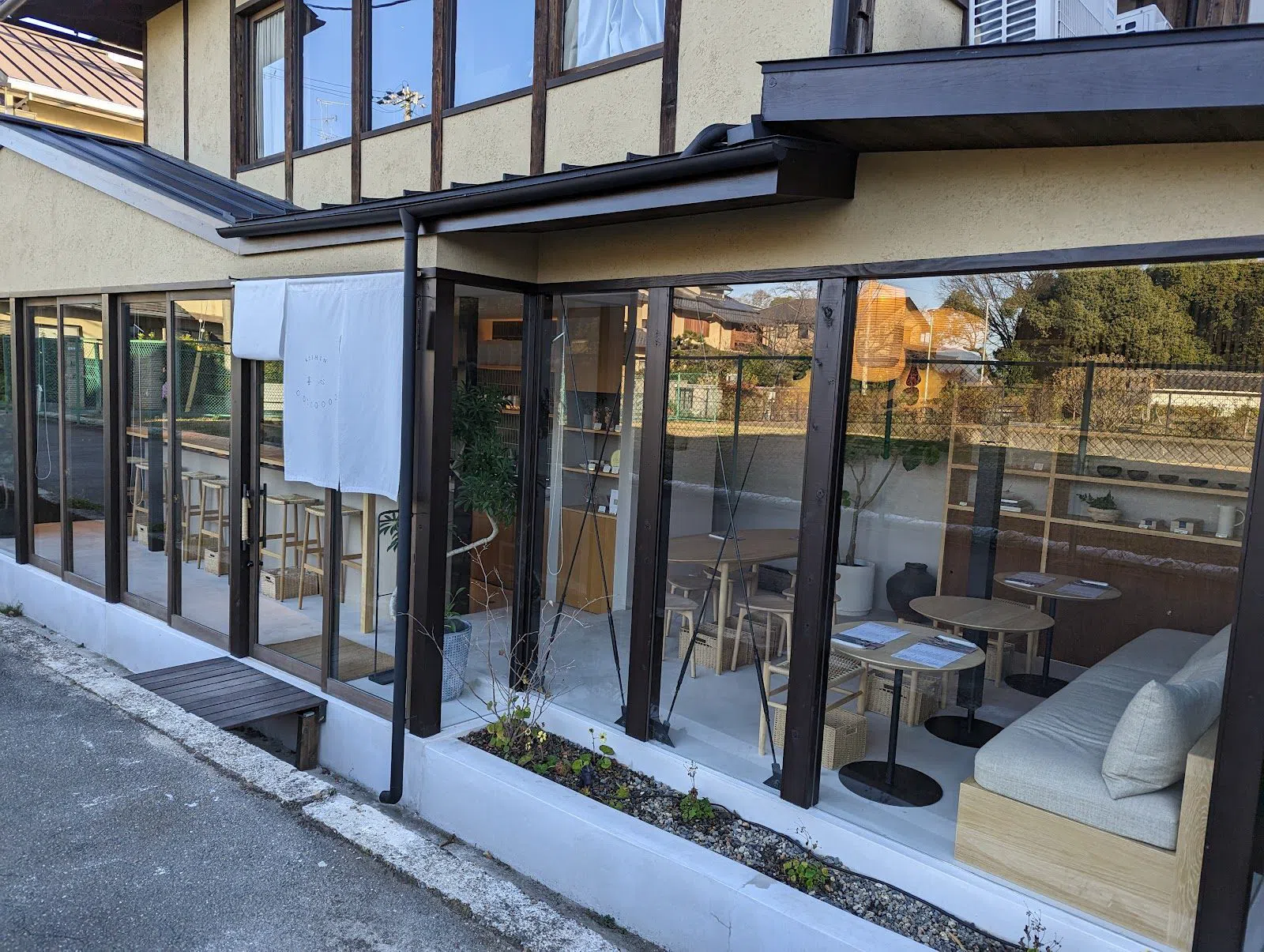
Between Kiyomizu-dera and the Kamo River, when your legs have had enough of the slopes, Kissa Kishin (Higashiyama, near Kiyomizu) is the graceful place to stop. It is the all-day café tucked inside the POJ and Maana craft complex, small and calm, comfortable for a couple or a few friends rather than a group, at around ¥1,000–2,500 a head. Time it for the mid-afternoon lull and you will have the light and the quiet more or less to yourself.
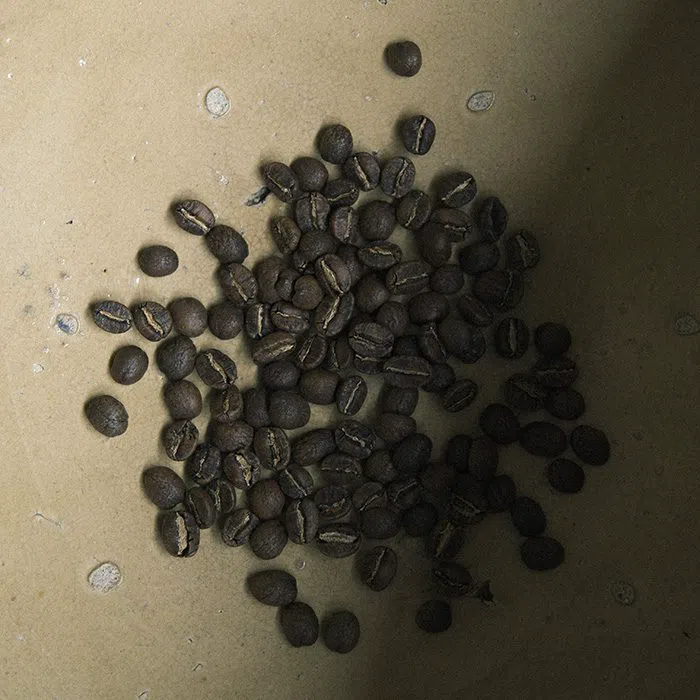
Coffee deserves its own note, because Kyoto takes it seriously. Weekenders Coffee (downtown, off Tominokoji) is a globally rated roaster with a devoted following, and a cup runs a modest ¥500–800. One caveat that matters in 2026: the beloved little Tominokoji machiya stand relocated this year, so confirm the current address before you set out. It has always been a tiny, standing, for-here-only perch — made for individuals and pairs, not groups — and the weekend Roastery courtyard remains one of the city's quietest pleasures if you can find the hour for it.
Learning how a machiya actually lives
The deepest way to understand these houses is to do something inside one with your hands. The standout for an international traveller is POJ Studio (Higashiyama, near Kiyomizu), where an hour-long kintsugi class teaches you to repair a broken ceramic with real gold lacquer — the philosophy that a mended thing is more beautiful for its history, which is more or less the whole argument for saving machiya in the first place. Sessions run roughly ¥8,000–15,000 a head, and a fuller-day 'Kyoto journey' is available; small groups are welcome and private group sessions can be arranged, but book seven to ten days ahead as places are limited. You leave with the piece you fixed, which is a far better souvenir than anything in a shop.
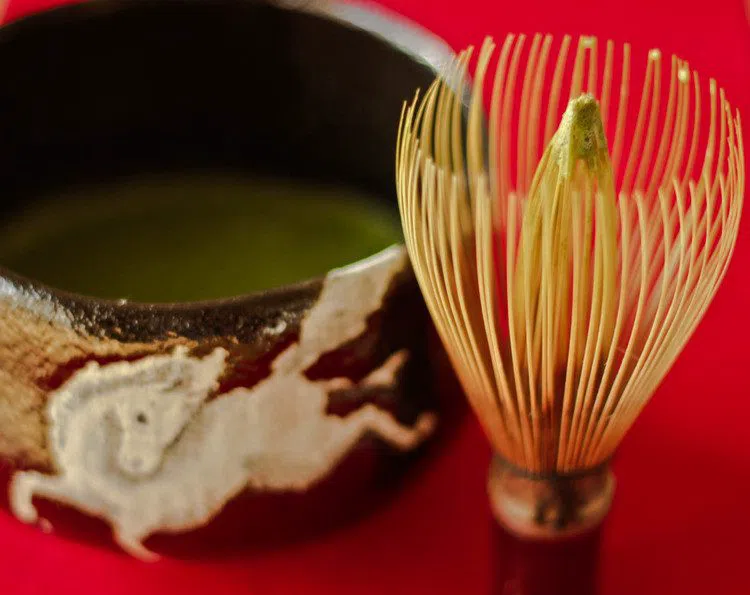
For the ritual most travellers come to Kyoto hoping to witness, Camellia Tea Ceremony (Flower) (Higashiyama, near Kiyomizu) is the most reliably English-guided and first-timer-friendly tea ceremony in an authentic townhouse. It is also, unusually, very group-friendly: shared 45-minute ceremonies start from ¥4,000, private sessions take up to eight guests from around ¥8,000 a head, and there are dedicated arrangements for parties of ten or more. If you are travelling as a group and want one shared cultural experience that everyone can actually book into, this is the easy, unpretentious answer.
To see how a machiya functioned as a working home and business rather than a hotel, go north to the weavers' quarter and Nishijin Tondaya (Nishijin), a living textile-merchant townhouse rather than a place to sleep. Tours, tea ceremony, kimono-wearing, and a machiya bentō lunch are all offered in a large traditional house, roughly ¥3,000–7,000 a head, and — unlike almost everything else in this guide — it comfortably takes a coach-load. It is the single best way to grasp how these buildings actually worked: where the merchant received guests, where the family lived, how the light and the seasons were engineered into the plan. Come here early in your trip and every other machiya you enter afterward will make more sense.
Practicalities
Getting around. Kyoto is a grid, which makes it forgiving. Buses reach the temple districts but crawl in high season; the two subway lines and the Keihan and Hankyu railways along the Kamo are faster and far less crowded. Most of what is in this guide sits within a short walk of Gion, Higashiyama, Karasuma, or Kyoto Station, and much of it is best strung together on foot — the machiya lanes only reveal themselves at walking pace. Bicycles are excellent on the flat central streets, less so on the Higashiyama slopes.
Cash and cards. The bigger hotels, stays, and experiences take cards, but Kyoto remains stubbornly fond of cash in its smaller rooms — carry enough yen for the ramen counter, the café, and the odd temple entry. Convenience-store ATMs are the reliable ones for foreign cards.
Timing. Machiya are seasonal machines, and they reward you differently through the year. Late afternoon is the magic hour, when low light rakes across the lattice and the inner gardens glow; arrive at cafés and restaurants either side of the midday rush. If you can avoid the peak weeks of autumn colour (roughly mid-to-late November) and cherry blossom (late March into early April), you will find rooms cheaper and the lanes quieter — though the houses are lovely in the wet, humid green of early summer and the still cold of winter too.
Budget. A whole machiya for a family or group runs roughly ¥35,000 to ¥100,000-plus a night; a luxury boutique or ryokan room for a couple, ¥50,000 to ¥130,000. Meals here are gentler on the wallet — ¥1,200 to ¥6,000 a head covers everything from the ramen counter to the omakase — and the hands-on experiences, ¥3,000 to ¥15,000, are among the best value in the city for what you take away. Book the stays and the kintsugi class well ahead; the tea ceremony and the textile house you can usually arrange closer in. To compare rooms and rates across the machiya hotels and everything around them, start with a Kyoto hotel search and reserve early — the best wooden rooms are the first to go.
Before you go
What exactly is a machiya, and why are they disappearing?
A machiya is a traditional Kyoto wooden townhouse — narrow at the street and deep behind, with an earth-floor passage and hidden interior gardens that pull in light and air. Thousands are demolished each year for parking and modern apartments, so the ones now restored as hotels, rentals, restaurants and workshops are a deliberate rescue of a vanishing form.
Which machiya stays are best for a family or a group rather than a couple?
For whole-house space with a kitchen and garden, Machiya Residence Inn is the most practical group and family choice, with 60-plus houses (several sleeping six to ten) and an English guest-services line. Iori Machiya Stay and Maana Homes also offer whole houses sleeping up to six to eight. Sowaka and Nazuna suit couples and small families better than large parties.
Are there tattoo-friendly machiya options in Kyoto?
Yes. Nazuna Kyoto Tsubaki St. gives every room its own private in-room bath, which makes it one of the few genuinely tattoo-friendly luxury stays in the city — you never have to use a shared bath where ink is often refused. Whole-house rentals like Iori, Maana and Machiya Residence Inn are also private by nature.
Can I experience a machiya without staying overnight in one?
Absolutely. Eat teori sushi at AWOMB Karasuma Honten or lemon chicken-paitan ramen at Ramen Muraji, pause at Kissa Kishin café, repair a bowl with gold lacquer at POJ Studio's kintsugi class, join a tea ceremony at Camellia (Flower), or tour the working textile house Nishijin Tondaya — all inside genuine townhouses.
When is the best time to visit and how far ahead should I book?
Late afternoon light is loveliest in a machiya, and the shoulder seasons outside the November autumn colour and early-April cherry blossom peaks mean quieter lanes and better rates. Book luxury stays and the POJ kintsugi class well in advance; tea ceremonies and the Nishijin Tondaya tour can usually be arranged closer to your dates.